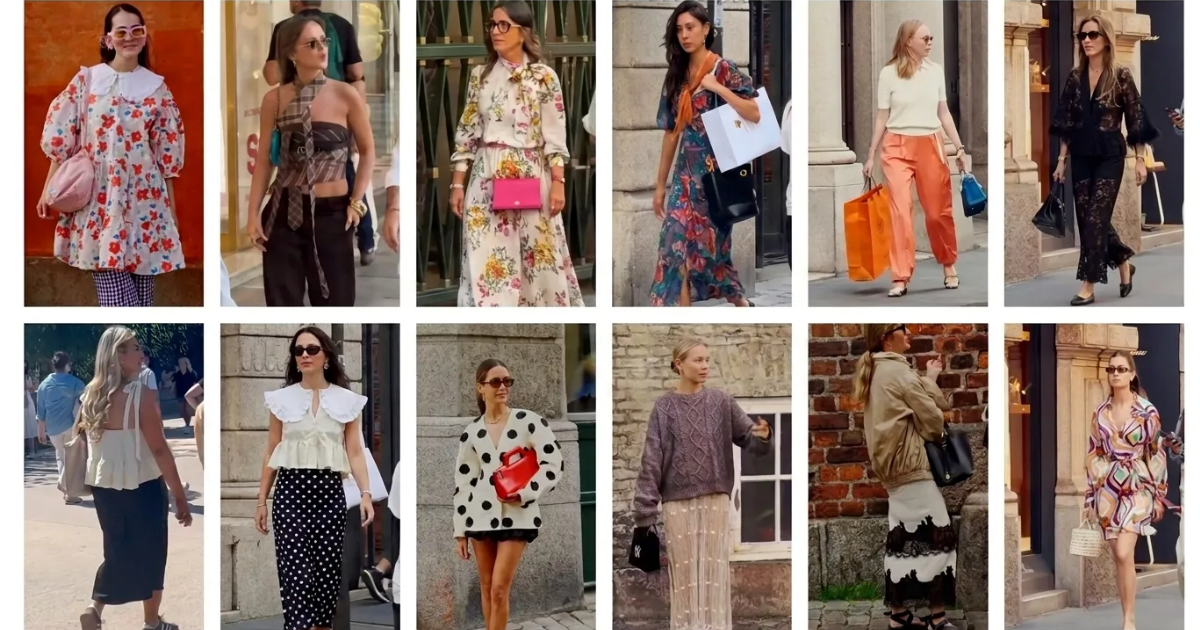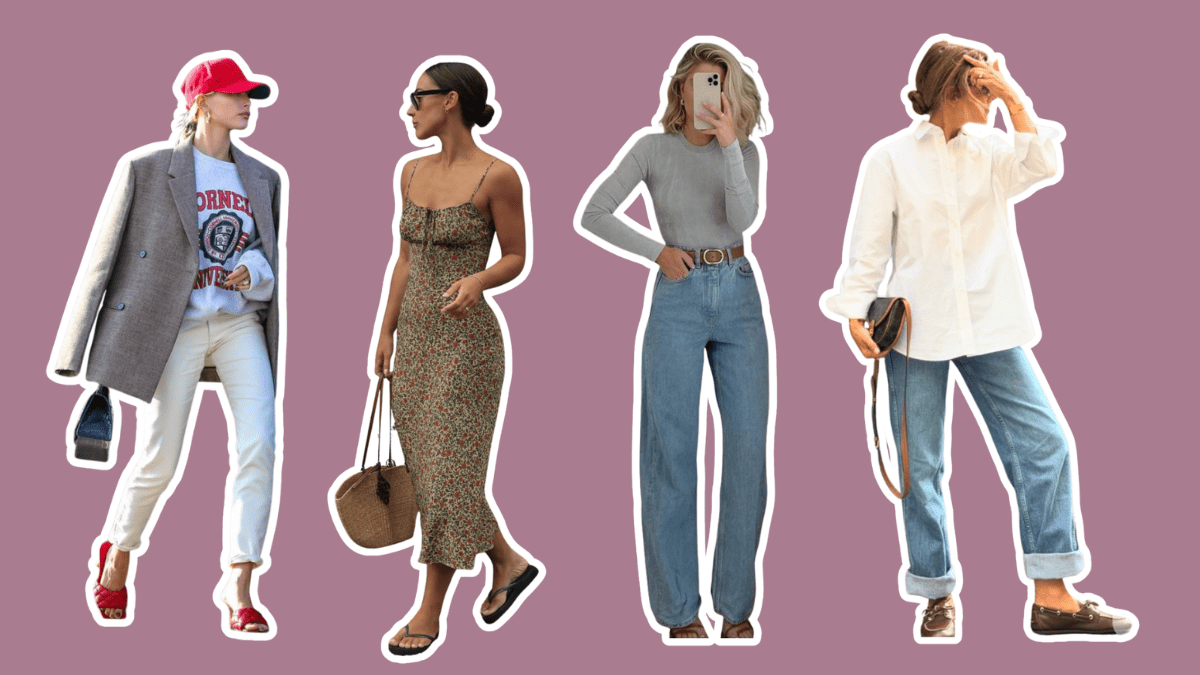

Style effortlessly. Live confidently.

Outfit Decisions

Woman in a sleeveless black top and white pants using a smartphone; inset on screen shows outfits in a fashion app, in a bright home setting with a plant nearby
Outfit Decisions

You Don’t Need More Outfit Ideas. You Need Proof That One Works.

Every morning starts the same way. You stand in front of a closet full of clothes and wonder what to wear. Not because you have nothing. Because you have too many options. The jeans work. The dress works. The jacket works. The shoes work. The problem is deciding which version works best. That is why so many women spend years collecting outfit inspiration and still feel stuck getting dressed. The problem was never a lack of ideas. The problem was a lack of evidence. Outfit Ideas Are Everywhere If you want outfit combinations, the internet has unlimited supply. Pinterest has them. Instagram has them. Fashion magazines have them. An AI wardrobe app can generate hundreds more. Need what to wear today? The suggestions never stop. But there is a hidden problem. Most people keep collecting ideas without collecting answers. They save inspiration. They do not save decisions. Outfit Suggestions Are Guesses. Saved Winners Are Proof. An AI wardrobe app can suggest what might work. Pinterest can show what worked on someone else. A fashion editor can tell you what looks chic. But none of those things can tell you what actually works on you. Only you can discover that. That is why the most valuable outfit in your wardrobe is not the newest one. It is the one you already tested. The one you already wore. The one you already know works. That outfit is proof. And proof is far more useful than inspiration. The Real Problem Is That You Keep Solving The Same Outfit Problem Think about how often this happens. You create a great outfit. You wear it. You feel put together. The day goes well. Then you forget the outfit existed. A week later, you are standing in front of the same closet asking the same question. What should I wear? The next month, you ask it again. The next season, you ask it again. Most women are not suffering from a lack of clothes. They are suffering from a lack of memory. They keep solving the same outfit problems over and over. Most Style Improvements Are Tiny People talk about style as if it requires a dramatic makeover. Usually it does not. I’ve worked styling people for 20+ years and the tweaks they need are usually in their closet. Obviously, shopping is fun, but not necessary. Most style improvements happen in the last ten percent. The dress already works. One version simply works better. With a jacket. Without a jacket. With sneakers. With sandals. With a belt. Without a belt. When people search how to make a dress look better, the answer is often not a new dress. It is a better comparison. When people search how to elevate your outfit, the answer is often not buying something new. It is seeing two versions side by side and noticing which one wins. Small edits. Big difference. Compare Two Outfits. Not Twenty. This is where most wardrobe advice goes wrong. It encourages more options. More options create more confusion. Instead, compare two. Outfit A versus Outfit B. Or even better: The same outfit with one change. One change teaches you more than twenty generic style tips. Because you are no longer learning what works on a model. You are learning what works on you. Why Adjust My Crown Is Different Most wardrobe apps help organize clothes. Most AI wardrobe apps help generate ideas. Adjust My Crown helps you make decisions. Take two outfit photos. Put them side by side. Choose the winner. If the answer is obvious, save it. If you are stuck, post it as a poll. Then save the winner. That last step is where the magic happens. Because every saved winner becomes evidence. Evidence that this outfit works. Evidence that this shoe works. Evidence that this jacket works. Evidence that this combination works. Stop Starting From Zero Every Morning This is the habit most people never build. They test outfits. They discover what works. Then they throw away the answer. Adjust My Crown helps you keep it. Every comparison becomes a lesson. Every saved outfit becomes a shortcut. Every collection becomes a library of proven outfits you can wear again. The goal is not to become more fashionable. The goal is to stop reinventing your wardrobe every morning. Better Style Comes From Better Evidence The women with the best style are not necessarily buying the most clothes. They are paying attention. They know which silhouettes work. Which colors work. Which outfit combinations work. Which tiny tweaks make the biggest difference. They build a personal database of smart styles. Not in their head. In practice. One outfit at a time. One comparison at a time. One saved winner at a time. Because the fastest way to dress better is not collecting more inspiration. It is remembering what already works. Download the free Adjust My Crown wardrobe app today. Compare two outfits. Save the winner. Stop starting from zero tomorrow morning. Download Adjust My Crown today.
Read More »
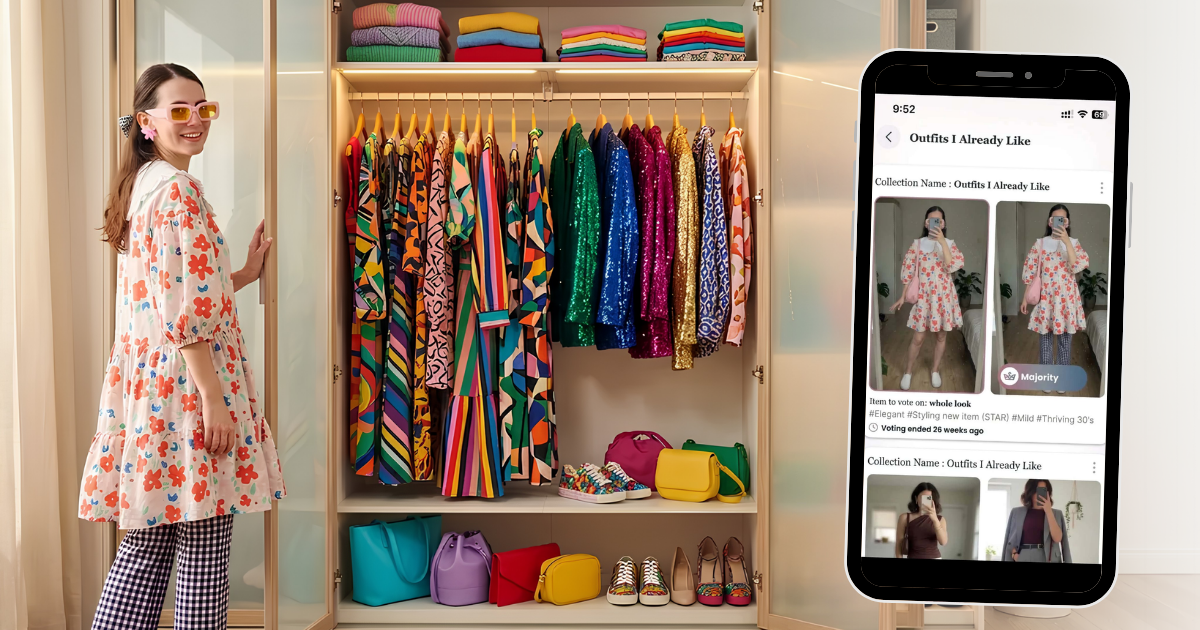
Woman in a floral dress and pink sunglasses stands by an open wardrobe of colorful clothes, bags, and shoes; a smartphone displays a fashion app.
Outfit Decisions

Your Closet Isn’t the Problem. Your Memory Is.

The Best Outfit Days are When You Forget What You are Wearing There is a particular kind of peace that comes from wearing the right outfit. Not the newest outfit. Not the most expensive outfit. Not the outfit that announces itself before you do. Just the right one. You are at dinner with your friends, outside on a patio. The weather is perfect. The light is that pretty golden shade you can’t quite capture in words. Everyone is relaxed. You are laughing, and not thinking about your clothes. Or readjusting your skirt. That is the gift of an outfit that works. It lets you be present. Now compare that to the outfit that is almost right, but not quite. The shirt is fine. The jeans are fine. The shoes should be fine. And yet the whole thing is giving “I tried, but the committee adjourned early.” You still go. You still smile. But part of your mind keeps checking the outfit. That is not vanity. That is distraction. Your Closet Contains More Answers Than You Remember Here is the blunt truth: your closet probably has more good outfits in it than you think. The issue is memory. You’ve forgotten what you wore last year and loved. You wore something last spring that worked beautifully. You had a daytime outfit that made you feel well dressed without feeling overdressed. You solved the hot-weather-but-still-cute problem once. You found the jeans and shoes that made a difficult top suddenly work. And promptly forgot that you had that outfit you loved. So a year later when the same scenario rolls around your instinct is discontent and shopping instead of the outfit you felt fantastic in. So the next time you needed that exact kind of look, your brain produced nothing helpful. Just the familiar chorus: “I have nothing to wear.” You don’t need to go shopping. You do have clothes to wear. You need to start adding your daily outfits to Adjust My Crown. Style Improves When You Remember People talk about how to find your style as if it is a dramatic reveal. Sometimes it is quieter than that. You learn your style by noticing what works. Which shapes make you stand taller. Which colors make you look awake. Which shoes make an outfit feel intentional. Which outfit combinations make you feel like yourself instead of like you borrowed someone else’s idea of being put together. That is how to have better style in real life. Not by chasing every trend. Not by saving 400 inspiration photos. By paying attention to what actually works on you. A wardrobe app should help with that. It should not just become another digital closet full of pieces you still do not know how to wear. Enter Adjust My Crown. Don’t Trust Your Brain With Every Outfit We use tools to remember everything else. Calendars remember appointments. Notes apps remember grocery lists. Planners remember school forms, deadlines, birthdays, and the tiny tasks that would otherwise float around your head like confetti with consequences. So why are we still expecting our brains to remember every outfit that worked? Your brain is already busy. It should not have to store the exact sandals that made the dress work, the jacket that saved the jeans, or the outfit that felt perfect for 100 degrees.  Side-by-Side Selfies Turn a Feeling Into Evidence The hardest outfit to fix is the almost-right outfit. You know something is off, but you cannot always name it. The proportions feel strange. The shoe is wrong, maybe. Or the shirt needs a tuck. Or the jacket is adding bulk where you wanted structure. Side-by-side outfit selfies make the vague feeling visible and help highlight what feels off. One version looks cleaner. One has better balance. One makes you feel more confident. That is how to change your look without buying a whole new wardrobe: You change one thing and see what happens. A better shoe. A better layer. A better tuck. A smarter proportion. Small change. Better result. Adjust My Crown Helps You Save What Works In Adjust My Crown, you can compare two outfit selfies side by side. If you know which one works, save it. If you are stuck, post it as a poll and let AMC users globally tap a crown to vote. No comments from other users. No critique thread. No follower counts. Just votes. Then save the winning look to a Collection and add your own private note if it helps: “Perfect for 100 degrees but still felt cute.” “Good for dinner.” “Wore on a first date with Luke.” “Needed different shoes.” Those notes become your personal style record. Start With One Week of Proof If you want smart styles that actually fit your real life, start remembering. Set an alarm and save every outfit this week. Or compare two outfits in Adjust My Crown. Do not judge the whole closet, and decide you have nothing to wear before you have even gotten out of bed. Just notice what works, day to day. That is how personal style gets clearer. That is how you dress better without starting over. Download the free Adjust My Crown app and start building a wardrobe memory your brain does not have to carry alone.

Read More »
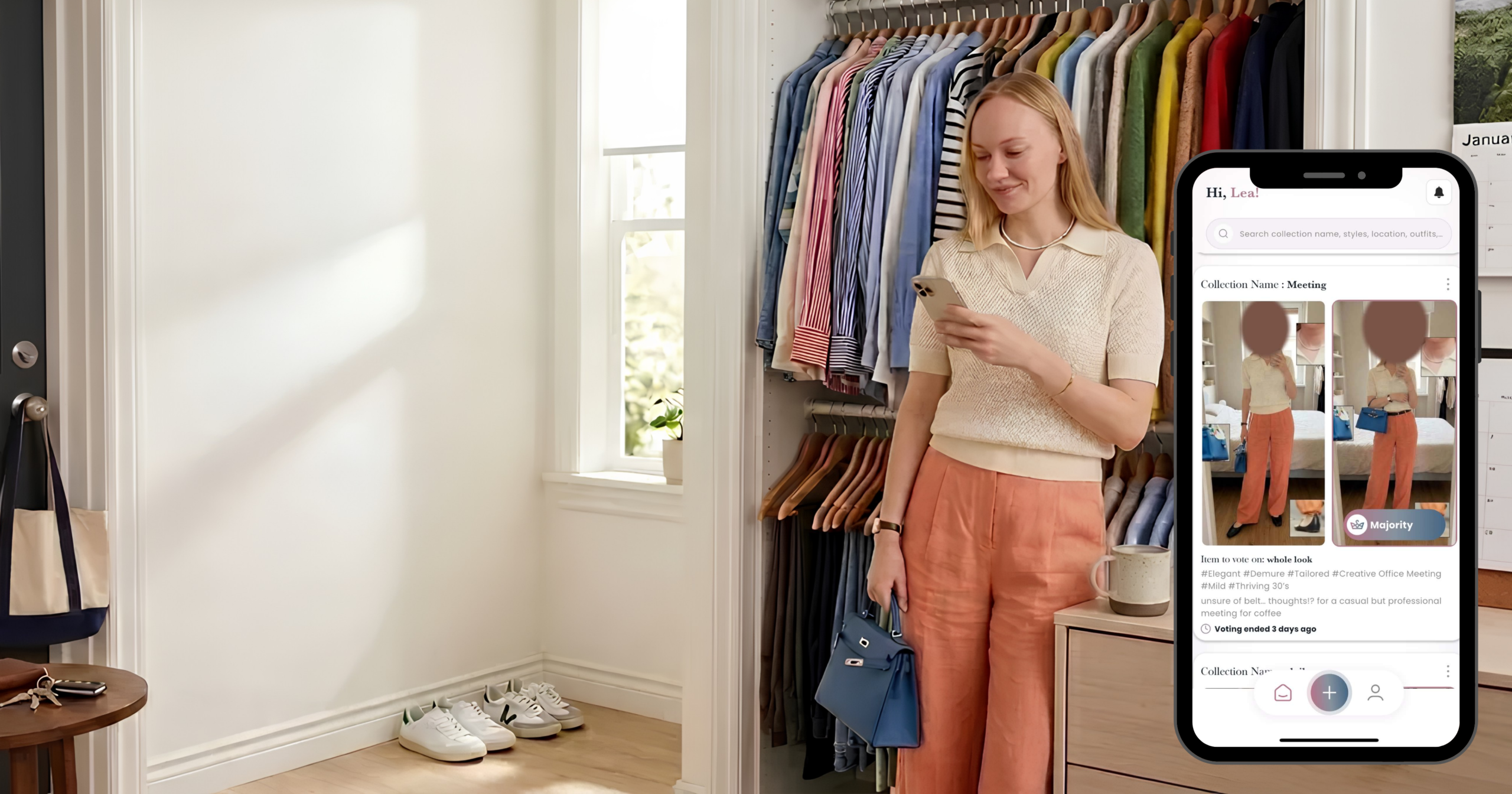
Woman in a clothing boutique looks at her phone, browsing a fashion app with a wardrobe gallery shown on screen.
Outfit Decisions

What to Wear Today? Stop Re-Deciding Your Outfits

Mornings Already Have Enough Decisions Mornings do not need another committee meeting. There is coffee to make, weather to check, bags to find, lunches to pack, texts to answer, and at least one person asking where something is while standing directly beside it. Then your closet joins the conversation. What to wear today? It sounds like a simple question. It is not. It asks you to solve for weather, comfort, plans, shoes, body mood, photos, and whether you need to look casual, polished, presentable, or like you did not lose a fight with the laundry pile. That is why getting dressed can feel harder than it should. The problem is not always that you need more clothes. The problem is that you are making the same outfit decision from scratch every morning. A useful wardrobe app should not just store clothes. It should help you decide, remember, and repeat what works. A Good Outfit Gives the Day Back to You Think about the good version of the day. You are headed to a picnic. The weather is perfect. Everyone is happy. The day feels full of potential. You put on an outfit that works, and suddenly your brain goes quiet. You are not tugging at your shirt. You are not regretting the shoes. You are not wondering if the jacket made everything worse. You are just there. That is the real benefit of looking put together. It is not about impressing everyone. It is about freeing your attention. Now imagine the other version. Same picnic. Same favorite people. Same perfect weather. But you hate your outfit. Not enough to cancel, because we are civilized. But enough that the day starts with second-guessing. You look in the mirror and think, “I own clothes. Why is this still so hard?” Because your closet has options, but your morning needs answers. You Do Not Need More Options. You Need Clear Winners. Most people do not need more outfit combinations floating around in their heads. They need fewer, better choices. The fastest way to dress better is not always buying something new. Often, it is testing one small change. Try the jeans with sneakers and then with sandals. Try the dress with the denim jacket and then without it. Try the tucked shirt and the half-tuck. Try the simple bag and the structured one. Side-by-side outfit selfies make the answer easier to see. One version has better proportion. One looks more finished. One feels more like you. One just works. That is the outfit to repeat. The Habit Is Simple: Compare, Crown, Save, Repeat This is where Adjust My Crown comes in. You compare two outfit selfies side by side. If the winner is obvious, save it. If you are stuck, post the poll and let AMC users globally tap a crown to vote. No comments from other users. No public critique thread. No follower counts. No social-media popularity scoreboard. Just simple votes to help you decide. That matters because the point is not attention. The point is clarity. Then you save the winning outfit in a Collection that you have created. This is the part that makes the habit work. The reward is immediate: you know what to wear today. The long-term payoff is better: the next time you have a similar plan, you do not start over. You already have proof. Confidence. Surety. Save Outfits Like Answers, Not Pictures A winning outfit should not vanish into your camera roll. Save it in a Collection. Dinner outfits. Travel outfits. School event outfits. Hot weather outfits. Weekend outfits. “I need to look put together but not overdressed” outfits. You can also add your own private notes, like: “Perfect for 100 degrees but still felt cute.” “Good for walking all day.” “Wore on a first date with Luke.” “Better with tan sandals.” Those notes make your wardrobe smarter because they capture context. Clothes do not exist in a vacuum. They exist in real life, with weather, plans, people, moods, and shoes that either help or betray the entire operation. Start Today With One Small Action Start with one of two things. First, compare two outfits in Adjust My Crown. Change only one thing if you can: shoe, jacket, tuck, bag, or accessory. Or second, set an alarm to save every outfit this week. No judgment. No dramatic closet cleanout. Just save what you actually wore. At the end of the week, you will have evidence. Which outfits made you feel put together? Which ones almost worked? Which ones deserve repeating? That is how you reduce decision fatigue. Not by becoming a different person. By deciding once, saving what works, and using it again. Download the free Adjust My Crown app today and start saving the outfits that make getting dressed easier:

Read More »
Outfit Decisions

The One-Minute Outfit Habit That Makes Getting Dressed Easier

No More Nothing To Wear Days Most wardrobe apps ask you to upload your whole closet before they become useful. That sounds organized in theory. In real life, it feels like homework with hangers. Adjust My Crown starts smaller: post one outfit. Compare two versions. Save the winner. Do that daily, and suddenly your closet becomes easier to use because you are not relying on memory anymore. Daily posting is not about becoming an influencer. It is about building a visual record of what actually looks good on you, for you. You Stop Starting From Zero Every Morning The worst part of getting dressed is not having “nothing to wear.” It is having plenty to wear and somehow still no plan. Daily posting fixes that. Each AMC post becomes a little breadcrumb back to an outfit that worked. Instead of rebuilding your entire identity before coffee, you open your saved looks and start from proof. Much better. Less dramatic. Fewer closet meltdowns. Less doubting yourself when you walk out. You Learn Your Style on Your Body A cute outfit in your head and a cute outfit in a mirror selfie are not always the same thing. Rude, but true. Daily posting gives you visual proof. You can see what looked polished, what felt off, and what tiny change made the whole outfit better. AMC helps you see what works on your body, with your clothes, in your actual day. That is more useful than another vague outfit suggestion floating in from the algorithm mist. You Notice Tiny Styling Improvements Most outfits are not completely wrong. They are almost right. That is exactly where AMC helps. The tuck. The belt. The jacket. The shoe. The bag. The sleeve roll. The thing no one talks about because it sounds too small, even though it changes the entire look. Side-by-side photos make those tiny differences obvious. Outfit suggestions are guesses. Side-by-side selfies show you what actually works. You Make Faster Outfit Decisions Over Time The more you post, the less you have to guess. Daily outfit posts create shortcuts. You start seeing patterns: the jacket you always like, the shoes that always clean up an outfit, the jeans that somehow betray you every third Tuesday. AMC turns those patterns into saved decisions. Future you gets dressed faster because past you did the testing. Over time, getting dressed becomes less about standing there spiraling and more about pulling from your own Collections. Very chic. Very efficient. Emotionally cheaper. You Create Outfit Formulas Without Making It a Whole Thing Some people hear “outfit formula” and immediately picture a capsule wardrobe and 4,000 rules. No thank you. A formula can be simple. When you post daily, you start noticing what you repeat because it works. That is your style showing up. You see the outfits that work and start seeing the formulas behind them. That is how “I have nothing to wear” turns into “I know exactly what works.” You Use More of What You Already Own The clothes you forget about are not always bad. They are just not attached to an outfit in your brain. AMC helps with that. Daily posting helps you notice what you keep reaching for and what you keep ignoring. That blazer is not “too much”; it works with jeans and a white tee. It also helps you bring forgotten pieces back into rotation because you can test them in real outfits instead of letting them live rent-free in the back of your closet. You Avoid Buying the Same Thing Again Sometimes the problem is not that you need more clothes. There is a very specific pain in buying another version of something you already own because you forgot you own it. AMC helps you see your patterns. You may realize you do not need more jeans. You need better shoes. Or you do not need another blouse. AMC helps you see the actual gap. That is smarter shopping. Less panic buying. Fewer “why did I order this?” return boxes. You Get Feedback Without the Comment Section Circus Sometimes you need another opinion. Not a full text debate. Not a public roast. Just a simple vote. AMC lets people pick the better outfit without leaving nasty comments, strange essays, or “hope this helps” energy that absolutely does not help. A vote is clean. A vote is useful. A vote answers the question: which one works better? You Build Confidence Through Proof Confidence is easier when you have visual proof. Posting daily side-by-side selfies gives you visual proof that you can put together outfits you like. AMC makes the question smaller. Which version works better? Which shoe cleans this up? That shift matters. Less identity spiral. More visual decision. You are building a personal lookbook of outfits that actually worked in your real life. You Turn Today’s Outfit Into Tomorrow’s Shortcut Daily posting on AMC is not about posting for attention. This is the real reason to post daily on AMC: every outfit becomes useful later. Today’s work outfit becomes next month’s meeting outfit. Today’s dinner outfit becomes your default “nice but not trying too hard” look. Today’s travel outfit becomes the one you pack again. AMC is not just a wardrobe app. It is a memory system for your best outfits. Post one outfit today. Not your whole closet. Not a perfect influencer carousel. One outfit. Compare the detail that feels off, save the version that works, and give future you one less thing to solve. That is the point of AMC: decide, save, repeat.

Read More »
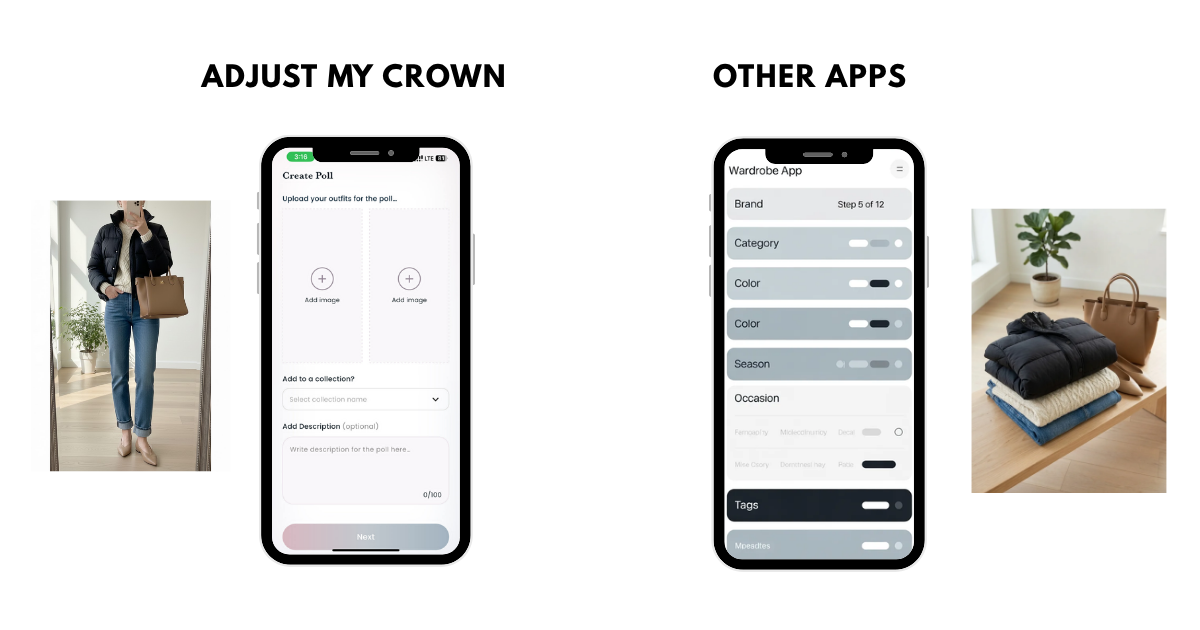
Side-by-side layout with two smartphones labeled 'ADJUST MY CROWN' and 'OTHER APPS', flanked by fashion photos of outfits.
Outfit Decisions

A Wardrobe App Tells You What You Own. Adjust My Crown Helps You Decide What to Wear.

You start with one outfit. Better yet, you start with two versions of one outfit. Try the shirt tucked. Try it untucked. Try the flats. Try the sneakers. Try the blazer. Try no blazer. Then upload the two photos side by side in Adjust My Crown and compare them. That is the whole point. Not more scrolling. Not more shopping. Not more “I should really organize my closet someday” guilt. Just one real outfit decision, made easier. Most wardrobe apps ask, “What do you own?” Adjust My Crown helps answer the question that actually matters at 7:42 a.m.: Which outfit should I wear? That difference matters. Because when you are standing in front of your closet trying to decide between the sneakers or the flats, the tucked shirt or the untucked one, the blazer or no blazer, you do not need a digital database of every cardigan you have owned since 2019. You need a decision. You need to see the two options side by side. You need to crown the winner and move on with your day. That is why Adjust My Crown exists. I first downloaded a wardrobe app in 2013 when I was pregnant with my second child. I wanted to rewear more, spend less on maternity clothes, and figure out what actually worked on my changing body. The idea made sense. A wardrobe app should help you put together outfits, remember what works, and spot the few gaps worth filling. But the experience? Not quite. Most apps wanted me to photograph every item I owned. Add the brand. Add the color. Add the category. Add the season. Add the occasion. Add the fabric. Add the existential dread. Lovely. I was pregnant, tired, and trying not to spend $400 on clothes I would wear for eight weeks. I did not need a second job called “administrative assistant to my own pants.” Twelve years and many wardrobe apps later, I built the one I actually wanted. Adjust My Crown starts where real dressing starts: with the outfit you are wearing. Not the imaginary closet you hope to organize someday. Not the aspirational version of your wardrobe where everything is steamed, categorized, and morally superior. Your real outfit. Your real mirror. Your real morning. Why Most Wardrobe Apps Lose People So Quickly Here is the classic wardrobe app pattern. You download the app. You are excited. You are ready. You are going to become the kind of person who knows what she owns, plans outfits calmly, and never panic-buys a black top at 9:30 p.m. Then you open the app. And it asks you to upload your entire closet. Photograph every shirt. Tag every pair of jeans. Add every shoe. Categorize everything by color, season, brand, occasion, and probably moon phase if we are being honest. You tell yourself you will do it this weekend. Then the weekend comes. And you have laundry, exam studying, children, errands, work, groceries, a birthday party, a missing permission slip, and one mysterious sticky spot on the kitchen floor. So the app sits there. Then you close it. Then you forget it. No shame. That is what happens when an app asks for hours of setup before it gives you one useful answer. The problem is not that wardrobe apps are a bad idea. The problem is that too many of them start with inventory instead of decision-making. And most people did not download a wardrobe app because they wanted to admire a database of their pants. They downloaded it because they wanted to know what to wear. A Fast Setup That is the difference. A digital closet can be useful, but only if you actually use it. And for most people, the friction is too high. If the app requires you to upload 200 items before it becomes helpful, the app has already lost. It goes like this with so many wardrobe apps: photograph, upload, check, tag, categorize, repeat 200 times. Then you close the app. And you never go back. Again, no shame. I have been there. I have downloaded the app. I have had the vision. I have imagined my future self calmly selecting chic outfits from a beautifully organized digital closet. Then the app asked me to start entering data like I had been hired by my own laundry basket. No, thank you. Adjust My Crown works differently. You do not need to catalog your entire closet before you begin. The Fastest Wardrobe App Setup Is the One That Starts With What You Already Wear Every morning, you get dressed That means every morning, your wardrobe is already creating data. Not spreadsheet data. Real-life data. What you reach for. What you avoid. What feels good. What looks better in natural light. What you wear again. What you keep almost wearing but never actually choose. That is the information that matters. So instead of building a digital closet from scratch, Adjust My Crown lets your real wardrobe build itself around your actual life. Wear it. Snap it. Compare it. Save what worked. Over time, your real style becomes visible. Not the fantasy version. Not the “I swear I’m going to become a linen-trouser person” version. The real one. The one that gets you through school drop-off, work, errands, dinner, church, brunch, travel, and the Tuesday where you have 18 minutes and absolutely no emotional bandwidth for a full outfit reinvention. Try This Tonight in Adjust My Crown Here is the easiest way to start. 1. Put on one outfit you might actually wear tomorrow. Or honestly, wait until tomorrow and just take a picture of what you’re wearing. 2. Change one detail. Take a pic. 3. Upload them into AMC, side by side. The detail can be tiny. Sneakers versus flats. Gold hoops versus no earrings. Half tuck versus no tuck. Belt versus no belt. Cardigan versus blazer. Same base outfit. One changed variable. That is where better style gets practical. Because often, your outfit is not wrong. It

Read More »
Outfit Decisions

Jean Shorts Outfits for a European City Vacation: How To Look Put Together Without Overpacking

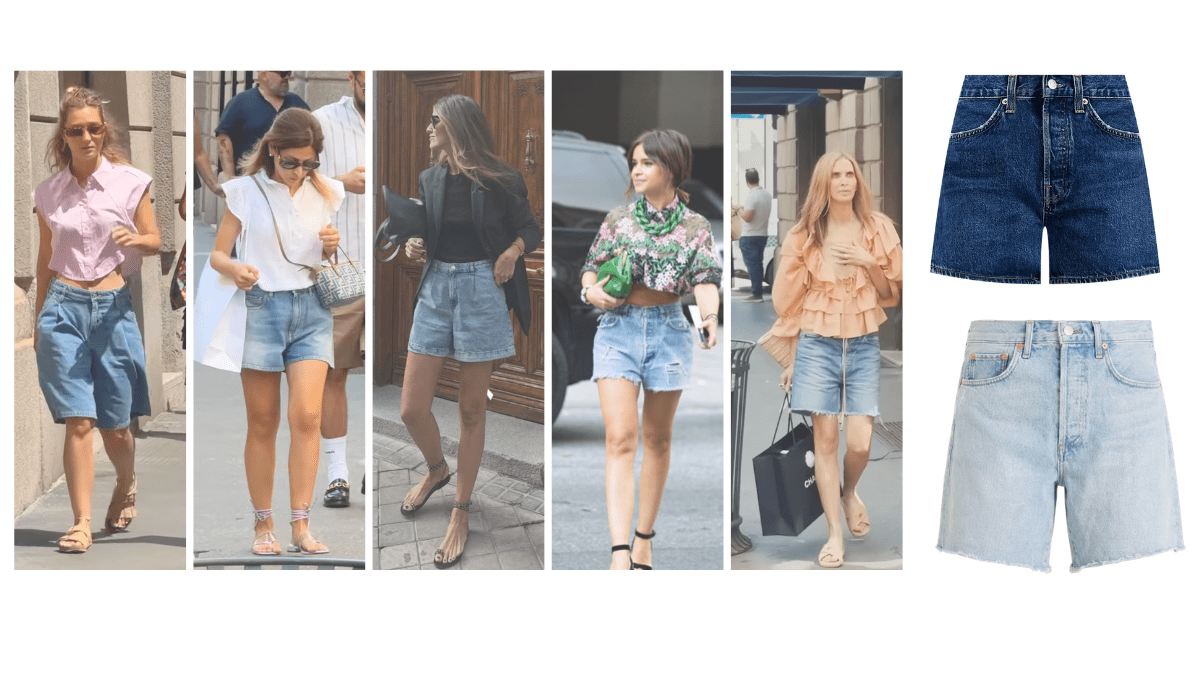
Yes, you can look put together in jorts! I have to be upfront about my angle, in all of life: I love denim. Always. Which means I naturally love denim shorts as well. So when I’m in Paris and see women in them, bells go off in my head, and I want to prove you can look put together & non-touristy and still wear jean shorts. One pair of jean shorts can carry you through most of a European trip. Not as a backup option, not as your “comfortable day” fallback and tweaked for dinner as well. These five looks above prove it. Three of them are genuinely polished. Two are casual but still put together. None of them look like the person got dressed without turning on a light. Start With the Shorts Themselves Before we talk outfits: the shorts in these looks are current. You’ll see a longer bermuda silhouette in a clean mid-wash, with and without distressing. Notice a high-rise tailored version in a similar wash paired with a blazer. You’ll also see shorter and more classic, but again — intentional fit, intentional wash, very stylish full looks. You can find “current” shorts at any budget, from Old Navy to Loewe, so don’t let that stop you from trying to update your jean shorts. The Top is the Focus Three of these five looks are polished specifically because of the top.  One look pairs a crisp black tee with a black drapey blazer: relaxed, layered, completely intentional. One look wears a cropped floral botanical print that is bold enough to get you into any restaurant in Rome. One look keeps it minimal with a tucked white top. Nothing flashy. No competition with the shorts. Just clean and decided. Look 1, a pink sleeveless button-down in a soft crop, is the most casual of the group. It works, but it has the least range for a long travel day that turns into dinner outside.  The principle isn’t simply “dress up your shorts.” It’s: let your top signal that you made a choice and put 1 min of thought into your outfit. Structured, artful, or intentionally minimal all read as put-together.  Shoes Set the Tone for the Whole Look Be really careful with sneakers and jean shorts (Even sneakers that cost more than my first car). “Designer” doesn’t get an automatic pass. Sneakers and denim, even if it’s all Prada, signal a casual-ness that may not land well on city streets.  A quick swap to a dressier shoe changes the whole look. Wedges, ballet flats, or chic sandals all change the look of the denim shorts outfit.  Look at the footwear across all four: flat sandals with interesting detail, ankle-tie flat sandals, black ankle-strap heels, simple flat raffia sandals. Not one athletic sneaker. Not one flip-flop. How to Look Put Together I’ve decided that I’m going to riff on this points idea all summer. I think it might be the easiest framework to “teach” style. I’m open to other ideas too.  Points aren’t about perfection. Points are your guardrails for styling your jean shorts.  Pink shirt + long jorts It’s a 6‑point outfit: the pink sleeveless shirt has some personality, the long, current jorts are the trend piece, the sandals and anklet quietly finish it off. This is your “comfortable but not sloppy” sightseeing baseline. If you want to stay low‑key, you can literally stop here: hit 6 points and walk out the door. White top + jorts + upgrades This one lands closer to 8–9 points: sunglasses and classic earrings, a white top with feminine detail, fresh longer non distressed jean shorts, upgraded lace‑up sandals, and a real crossbody bag. Now we’re in “photo‑ready museum day” territory. It’s a great example of how you can keep the same denim and still turn the volume up just by stacking more 2‑point pieces like special shoes and a structured bag. Black top + blazer + tailored shorts The plain image is already good: black tee, tailored blue shorts, simple sandals. But notice all the extra details that bring it up to a 9‑point outfit once the black blazer, chic sandals, classic jewelry, structured black purse, and sunglasses are all in play. This is the “European dinner outside” look: same jean shorts, but every add‑on is intentional. The blazer and shoes would look fantastic with a sundress too. This is a carryon dream combination.  Floral top + distressed shorts + wedges Here the graphic top and shoes do the talking: bold jewelry, colorful clutch, fantasy floral blouse, slightly distressed shorts, and wedge sandals. This is the most bold of the set. If this outfit feels too much for you, subtract a point or two. Swap wedges for flat sandals, or trade the bright bag for a neutral, and watch the outfit drop back into your own sweet spot. Peach shirt + long shorts + raffia The last look is the softer version of a statement outfit. The plain image is an easy travel look: dramatic, feminine top, updated longer shorts, raffia bag, raffia sandals. It proves you don’t have to chase a 9 every day. For a market morning, shopping and strolling, or train day, 6 well‑chosen points in a calm color palette is enough to look intentional and still feel relaxed. Build the Capsule Before You Pack It The homework is simple when you want to look put together: pick which “point level” feels right for your day, then stop as soon as your outfit hits that. Then photograph them to either poll them for honest but safe opinions or photograph and post them just to ‘remember this fit’. Create a Collection called “Jean Shorts Outfit” or maybe much more specific like “Paris & Provence June 2026”.  Go even farther and create three looks for each pair and save to the Collection:  If you can’t style them three ways, they’re not your travel shorts. If you can, you’ve just solved four days of European city outfits with one piece. 

Read More »
Outfit Decisions

How To Elevate Your Outfit Without Adding More Clothes

Summer Outfit Points Edit Most women do not need more clothes. They need one better decision. That is the whole idea. When an outfit feels bland, most style advice assumes you need to add something, buy something, or pile on more “styling.” But usually the outfit is not missing a shopping trip. It is missing one stronger choice. A better shoe.A better bag.A belt.A jacket instead of a sleepy cardigan.A necklace at the neckline that needs one.A quick tuck.A little more contrast. That is why I like the outfit points idea so much. Sometimes an outfit does not need “more.” It just needs a +1 to become +2. And the cleanest way to get there is often a swap. Why adding more is not always the answer (also it’s hot in summer) “Elevated” does not mean “more accessorized.” More pieces can create clutter, fuss, and that overdone feeling women hate. If your outfit feels off, the problem is often not quantity. It is that one part of the outfit is dragging the whole thing down. Maybe the shoe is too casual. Or maybe you need to add a casual shoe to a dressy outfit for interest…Maybe the bag is forgettable.Maybe the silhouette feels stale. Skinny jeans? Time for a pass on those if you need more points in your outfit.Maybe the outfit has no focal point. That is a much better way to think about How To Put Together An Outfit. Not “what else can I add?” but “what is the weakest choice here?” The difference between more pieces and more intention A bland outfit is not always simple. Sometimes it just looks like everyone else and not like you. That is the real issue. More intention means: This is also why How To Find Your Style has less to do with shopping and more to do with noticing what helps you look more like yourself. Look at this beautiful woman in Milan. Between her radiant smile and her bold Pucci dress and the ruffled skirt on on the Pucci dress (because lots of Pucci can be more streamlined and straight, so to have the ruffles is very intentional), and her sweet dog, she’s showing us how joyful, ebullient, and colorful she is. I love her laid back pony tail too. She’s full of life and it shows! I want to go on a walk with her and stop for cappuccino. She shows who she is with her choices. You are not trying to become more decorated.You are trying to become more specific and more you. Easy swaps that raise the score without feeling costume-y This is where the points framework helps. If an outfit feels too low-point for you, it may only need one better move. Sneaker to ballet flat (or vice versa) Same outfit, different energy. A sneaker can keep an outfit at a 3. A ballet flat may take it to a 4 or 5. Neutral shoe to colored shoe A colored shoe can act like a +2 without adding clutter. It wakes up a simple outfit fast. No belt to belt A belt adds structure and makes the outfit feel intentional. Sometimes that is all it takes. Cardigan to jacket A jacket usually adds more shape and point of view. If the outfit feels limp, this swap matters. Bare neckline to necklace Not every outfit needs jewelry, but many need one thing at the neckline. One necklace can be enough. Untucked to quick tuck A small tuck can fix proportion in seconds. This is not fussy if it is fast and actually improves the line. That is the kind of practical advice that makes How To Style Basic Clothes useful in real life. How points make this easier Sometimes your outfit feels bland because it is sitting at a 3, and you usually look better at a 5. That does not mean you need a new outfit. It means you may need: For example: The goal is not to hit a magic number. The goal is to notice your range. That is a big part of How To Know My Style. Some women look best at a 4. Some at a 6. Some need less. Some need one more interesting choice. When a lower-point outfit actually looks better This matters too. Sometimes the outfit looks better when you stop. The more bold necklace makes it fussier.The jacket makes it heavier.The extra detail pushes it past your sweet spot. A lower-point outfit can absolutely be the winner. That is why style is not about adding more. It is about knowing when enough is enough. Each image below shows one more point being added. Can you spot the changes? She stops at a perfect point though… Use AMC to compare and remember This is exactly where Adjust My Crown fits into your style journey. Most women do not just have a clothing problem. They have a testing problem and a memory problem. AMC solves both – polls for the testing and collections for the memory. They forget: That is why AMC matters. It gives you a way to compare one change at a time and remember the result. Use the same outfit and test: That is how you learn. And that is where the reference photos help too: several of these images show the same outfit from two angles, which is exactly the point. Style gets clearer when you can really see the outfit, not just guess from one frozen frame. AMC lets you save the winning version, so you stop starting over every morning and stop impulse-shopping for answers you already own. That is a much smarter path to How To Elevate Your Outfit than buying something new. You probably do not need something new Most style advice gets elevation wrong because it assumes you need something new. Your closet is pretty full, right? You probably need: That is all. And once you start comparing and remembering what works, you stop looking like everyone else and

Read More »
Outfit Decisions

How To Put Together an Outfit: The Third Piece, Styling with Outfit Points

and the One Move Most Women Skip I have been helping women get dressed for more than twenty years, and here is the truth: It is never the new purchase that “changes everything”. It is usually an older (beloved?) piece, used properly. A bracelet you forgot about. A belt you have not touched in two years. Boots that are several years old that you never thought to wear with that dress. Bold hoops you wore so much then got tired of and just found again. A vest. A sharper bag. A collar with pearls on it you bought from H&M years ago under a sweater. A watch that suddenly looks better with a beaded bracelet next to it. After you’ve added the beloved piece, you style. You cuff pants. You tuck a sweatshirt. That is what changes the outfit. Not because it is new. Because it gives the eye somewhere to land. Most women do not look boring because their clothes are basic. They look boring because they stop styling one move too soon. That is where the third piece rule can help. That is also where it gets misunderstood. In classic styling language, a third piece is usually a layer. A blazer. A cardigan. A vest. A jacket. Something that changes the structure of the outfit. In real life, people often use the phrase more loosely to mean any extra styling element. I think it helps to separate the two. A third piece adds structure.An outfit point adds visual interest. That distinction matters, because it gives you a better answer to how to put together an outfit that feels finished without looking overdone. When you live in a warmer climate or are in summer/early fall, you’d melt with a third piece that fits within the classic styling language. Thinking about ‘points’ is helpful in all climates or in all seasons. Look at these pics of the beautiful Hailey Bieber. In the first side-by-side pic (Are the side-by-side outfit selfies Adjust My Crown’s most helpful feature?), the third-piece is removed but the outfit is still fully styled (hoops + front tuck + hat + rolled cream jeans). Just adding a third-piece to the unstyled outfit wouldn’t have been as magical as the styled plus third piece outfit. Do you see how “Add a third piece” is incomplete advice? Start here: outfit points are the places the eye lands This is the cleaner framework. Reading this post first will help. An outfit +1 is what you more or less expect to see. The base. The obvious part. A simple dress. A shirt and pants. A sweater and jeans. Necessary, fine, functional. An outfit +2 is where the eye lands. That point might come from shape, shine, contrast, structure, texture, or movement. You are not trying to decorate yourself like a holiday mantel. You are trying to give the outfit a little visual rhythm. The only ‘third-piece’ on that list was a vest but they’d all enhance the outfit. That is why this works. The eye needs a few places to stop. What the third piece rule gets right, and where it gets sloppy The third piece rule gets repeated because there is truth in it. That is why I prefer this breakdown: Every third piece can create a point. Not every point is a third piece. That is the cleaner way to think. Most women do not need more clothes. They need one better move This is the part that matters in real life. I cannot tell you how many times a client thought she needed to shop, when what she really needed was to change the bag, add the belt she had not touched in two years, or pair a dress with boots she had not worn in years and did not realize she could wear with a dress. That is the shift. Not more clothes. Better use of the ones already there. A lot of style advice quietly assumes the answer is acquisition. New top. New shoe. New trend. New personality, apparently. Usually not. Usually the outfit is close. It just needs one more deliberate move. See how the red bag and red scarf quietly shift the outfit? It looks resolved. It looks finished. It looks styled. Not louder.Not busier.More resolved. That is why so many women think they have nothing to wear when the real problem is that they keep wearing the same combinations at the same level of finish. They are not out of clothes. They are out of fresh eyes. A good outfit usually has a base, then a few places for the eye to land This does not need to become math, or a burdensome idea, but the logic is useful. You start with the base. The expected pieces. Your +1s. Then you ask: does this outfit need one point of interest, or two? That is it. Sometimes the answer is a true third piece: Sometimes the answer is not a layer at all: And sometimes the answer is nothing. That part matters too. Because the goal is not to add. The goal is to finish. Some outfits need one more point. Some need restraint. There is a difference. One tiny example that proves the point A woman puts on: Perfectly fine. No issue. Also easy to forget five seconds later. Now add: Same woman. Same base. Very different result. The outfit has shape now. It has contrast. It has a few places for the eye to land. That is often the whole difference. Look at this same outfit, with one element removed at a time. Notice how subtle each item is: Here is the same idea in reverse, with pieces being added to get the to fully styled look at the end: The most useful question is not “What should I buy?” but “Where does the eye land?” That question will take you farther than a lot of so-called style rules. Look at the outfit and ask: That is how you improve a

Read More »
Outfit Decisions

How To Find Your Style: Are You a 3-Point Dresser or a 10-Point Dresser?

Math and style? What? Rude. There is a certain kind of fashion advice that sounds helpful for about six seconds and then immediately becomes annoying in real life when you’re, driving carpools, babysitting, or having to wear a uniform. Add a blazer.Do a French tuck.Put on more jewelry.Wear a “third piece.”Try harder, apparently, while also pretending it all happened effortlessly. And sure. Sometimes those tips work. But sometimes they do not. Sometimes a blazer makes you look sharper. Sometimes it makes you look like you are cosplaying competence at pickup. Sometimes more accessories make an outfit feel finished. Sometimes they make you feel jangly, overdone, and strangely unlike yourself. That is why the outfit point system is interesting when trying to help someone find their style, their sprezzatura or je ne sais quoi. Not because it gives you one more rule to obey. Not because every good outfit on earth magically equals eight. But because it gives you a way to notice something most people have never put into words: You probably have a preferred level of visual interest. And it doesn’t have to be eight points. Some women feel best in a clean, low-detail outfit (I wish this were me). Others need a little more contrast, texture, structure, or polish before they feel like themselves (Hi. It me. It can get busy here, peplum-y, puff sleeve-y, pattern-y…) Some come alive with a bag, a belt, a stack of jewelry, and a jacket. Others look incredible the moment they remove two things. That is where style rules (like the 7 point rule, the 8 point rule, or the Third Piece Rule) gets useful when personalized with Adjust My Crown, your new favorite wardrobe app. The point is not to hit a perfect number. The point is to figure out your range. And once you know your range, getting dressed gets much easier. Why this idea is actually useful The so-called 7-point or 8-point outfit rule is usually explained like this: every item in your outfit gets a point value. Basics might be worth 1 point. Pieces with more personality, contrast, structure, texture, or trend energy might be worth 2. You add it up, and somewhere around 7 or 8 is supposed to be the sweet spot. I get why people like it. It is fast.It is visual.It gives a tired brain something to grab onto. It gives you an equation. If you love basics but keep ending up in outfits that feel a little too plain, it can help you notice what is missing. Not in a dramatic “reinvent yourself” way. In a practical, grown-woman, “why do I look unfinished when I own perfectly good clothes?” way. That said, I do not think the lesson is “every outfit should be 8 points.” That is too rigid. It also ignores context, personality, lifestyle, climate, mood, and the simple fact that some people look fantastic at 4 while others need 9 before the outfit starts speaking. The smarter takeaway is this: Your outfits probably live in a range. And that range says a lot about your style. The third piece rule is helpful, but incomplete The third piece rule has survived this long because there is truth in it. A base outfit can feel flat: Then you add one more thing: Suddenly the outfit feels more intentional. That is real. But the third piece rule is also incomplete, because it quietly assumes more is always better. It is not. Sometimes the right third piece transforms the outfit.Sometimes the third piece is exactly what ruins it. A minimal outfit can already be done. In fact, some of the chicest outfits in the world are basically three calm, well-chosen elements with no extra circus attached. The issue is not whether you added “a third piece.” The issue is whether the outfit has the amount of visual interest that feels right on you, for your real life, with your body proportions. That is a much better question. It moves us away from formula worship and toward actual style. The point system, simplified This does not need to be complicated enough to require a spreadsheet and a support group. You are just looking at how much visual energy each part of the outfit brings. A very simple way to think about it: That could look like this: But this is where people get weirdly rigid, and I would not. Keep in mind that a hoop earring might be 1 point on one person and 2 on another. A leopard flat might feel like a basic in one wardrobe and a statement in another. A bright bag may barely register if you dress colorfully all the time, but feel like a lot if you live in navy, cream, camel, and black. So no, the internet does not get to assign your points for you like some little fashion accountant. You do. I am going to try to assign values for illustrative purposes but if you disagree with my fashion accounting, chime in! The value is in noticing what feels basic, what feels expressive, and what pushes an outfit into your sweet spot. Your best outfits probably live in a range, not at one magic number This is the part that matters most. You may not be an “8-point person.” You may be a 4-point person who keeps forcing extra details because you think stylish women always look more accessorized than you. Or you may be a 9-point person who keeps stripping outfits down in pursuit of chic minimalism, then wondering why you feel dull. That is why this framework is useful for answering the age old and always shifting question, “How To Know My Style.” Not because it gives you a label.Because it helps you identify your preferred visual density. Here is a rough way to think about it: 8 to 10 points and up This is where outfits start to feel more expressive, layered, styled, or fashion-forward. It can be fantastic. It can also feel

Read More »
Outfit Decisions

Summer outfits that look expensive

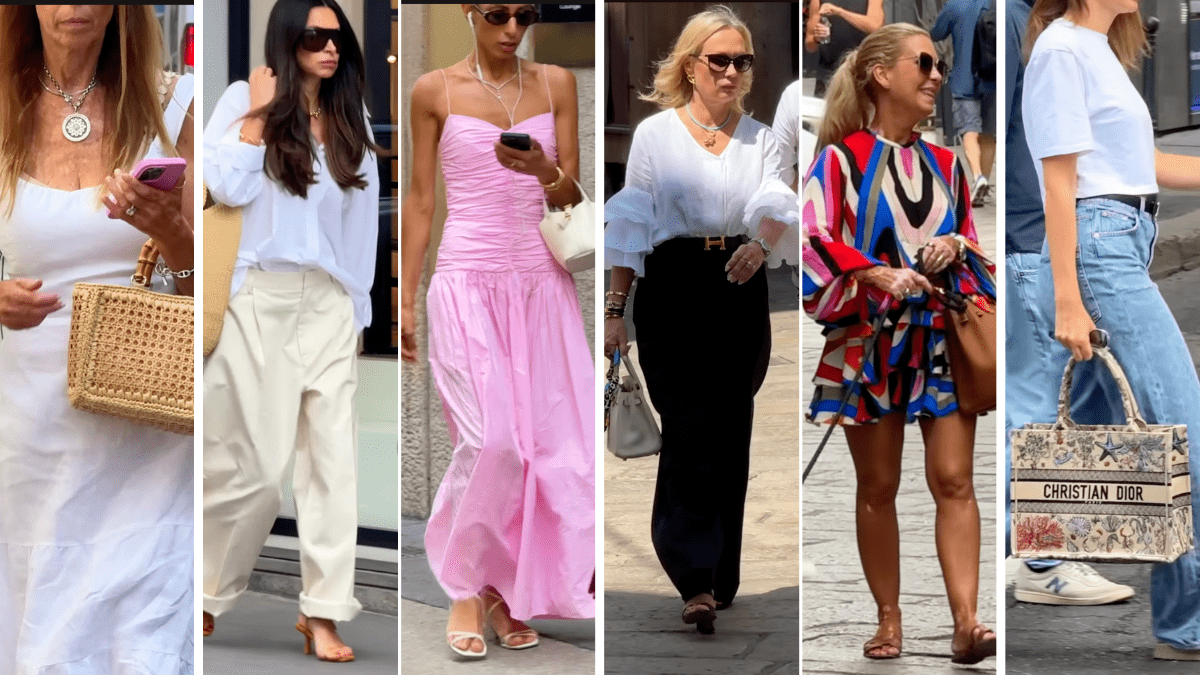
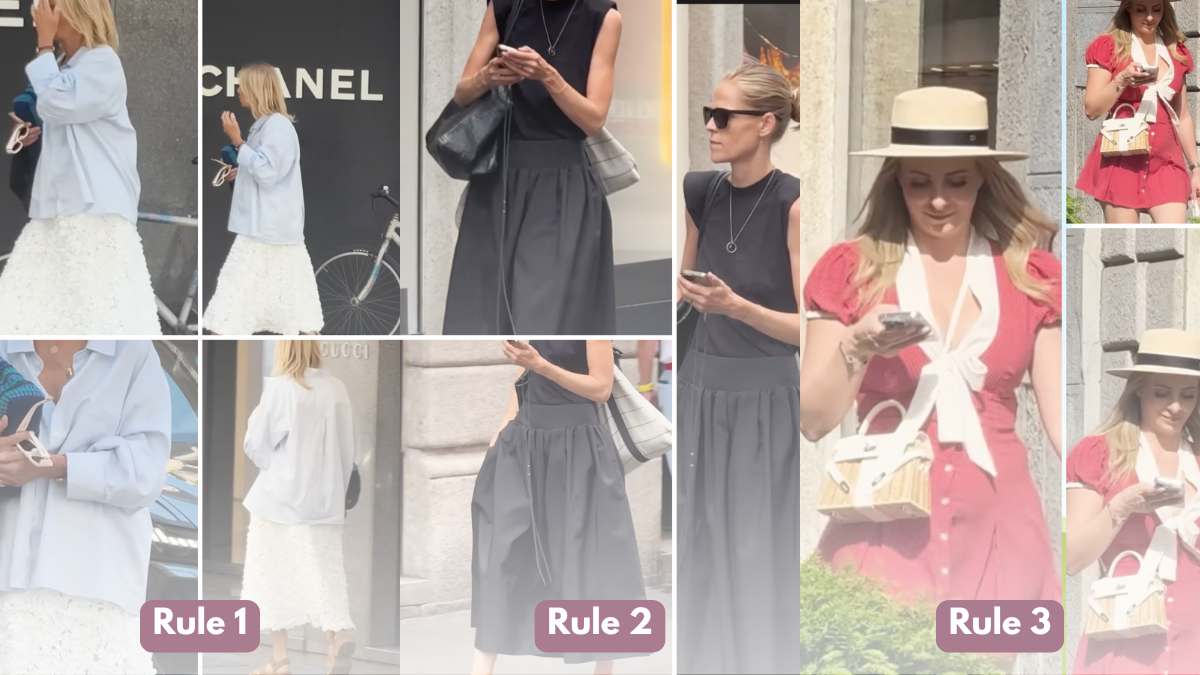
9 examples. 3 rules. 0 guessing Summer outfits are where polish gets tricky. You want ease, you want clean lines, you want outfits to look expensive, instead of a flimsy falling apart cotton, and you also want to breathe. The issue is not your taste. It’s the math. Lighter fabrics, less layering, and one wrong shoe can push a look into I Gave Up energy (not polished Low Effort Energy). So I’m using 9 Milan street style outfits to prove 3 rules (You know I hate rules. Feel free to break these all), then we’ll run quick tests in Adjust My Crown so you stop staring at your mirror, unconvinced, and unsure. Three rules that keep summer outfits looking expensive Rule 1 of 3: One statement piece, everything else simple Let one item be the headline. The rest stays simple. Outfit 1 of 9: Guipure lace skirt + oversized boxy blue shirt. The lace is the main event. The shirt is the quiet balance. Crisp meets delicate, and the contrast reads expensive. Outfit 2 of 9: Bold print layer over a simple base. The print gets the spotlight. The base stays clean so it looks styled, not busy. Outfit 3 of 9: That green and cream Valentino print dress is working. The rest stays streamlined so the print looks like a choice. Shop your closet first. If you don’t own guipure or broderie, any textured white skirt can play the role, eyelet, embroidery, or crochet. Pair it with the crispiest oversized button down you already have. If it’s a maybe, it’s a no. Rule 2 of 3: Strong silhouette wins before details even show up If the outline is sharp, the whole outfit reads polished. Defined shoulders and a real waist carry the look. Outfit 4 of 9: Black on black with defined shoulders and a defined waist. It’s clean, strong, and confident. No fuss, just shape. Outfit 5 of 9: The white suit. Tailoring equals polish, even in heat. This is one of those “Outfits To Look Expensive” that looks considered without being a ‘try hard’ Outfit 6 of 9: Cream dress, tan bag, sneakers. Simple silhouette, tidy proportions. The sneakers work because the dress isn’t floppy or fussy. If you ever buy one “forever” piece, buy the silhouette, not the trend. A shoulder that holds its shape. A waistband that sits where you want it. A dress that doesn’t collapse when you exhale. Rule 3 of 3: Tight color story, tidy finishing A limited palette reads polished or edited. Then the finishing needs to look intentional. Outfit 7 of 9: One strong color moment, styled simply. The restraint is what makes it feel elevated. Outfit 8 of 9: Tonal pink, sporty and clean. Monochrome makes summer outfits look more expensive without trying. Outfit 9 of 9: Pink suit with a red bag. The outfit is cohesive, then one accessory gets to be the point. Quick filter. Pick one color family for the day. Then pick one item allowed to be loud, either the bag or the shoe. Not both. Keep it that simple. Why advice doesn’t stick without a test You can collect tips forever and still feel stuck, because tips don’t answer the only question you have: Which one looks better on me, today, in real life? When you don’t have a way to decide, you default to the safe outfit, buy a backup piece you don’t love, and keep wondering why your closet feels full but unhelpful and getting dressed feels meh. Adjust My Crown turns the moment of doubt into a simple test. Two photos, one change, fast feedback. Then you stop paying the same mental tax every week. That’s how “Outfits To Look Expensive” become repeatable, not accidental. Then, you REMEMBER what worked, which is harder than it seems. How many of us blank in the morning and wonder what to wear? I know I do at least 6 days a week. Collections solves that. Three Adjust My Crown polls to steal today Change one variable only in your side-by-side outfit selfies: Poll 1: lace skirt look Version A, half tuckVersion B, full tuckSame skirt, same shirt, different waist story. Poll 2: black on black Version A, flat sandalVersion B, clean sneakerSame silhouette, one shoe shift. Poll 3: pop bag look Version A, tonal bagVersion B, contrast bagSame outfit, one accessory decision. Post the two photos in Adjust My Crown, save the crowned winner, and you never have to debate that exact question again. Your summer outfits checklist, less is more If it’s a maybe, it’s a no.If the silhouette is strong, stop adding things.If the statement is loud, make everything else simple.If the palette is tight, keep the finishing tidy. Do this next Download Adjust My Crown and post your first poll today, then join the email list for weekly outfit tests and pin ready templates that don’t require a panic purchase.

Read More »