
Style effortlessly. Live confidently.

Closet Cleanout

Closet Cleanout

The 3 Types of Purses That Replace Your Entire Collection (Clutch, Crossbody, and Tote System)

…and when should you buy a green purse instead of a brown purse? Most women don’t have a purse problem. They have a decision problem. You own the clutch purse.You own the crossbody bag.You own tote bags.You probably own three versions of an everyday purse. And yet… you still grab the same one. This is not about fashion.It’s about building a functional system. You don’t need twelve bags.You need three categories that actually work for your life. The Minimum Purse System Instead of buying randomly, organize your bags into three functional sizes. 1. Clutch Purse (Small) Phone. Keys. Wallet. Lipstick.Your clutch purse is for evenings, events, stadium games, date nights, and anywhere you want polish without bulk. 2. Crossbody Bag (Hands-Free Small) Still compact, but practical.A crossbody bag is your errand runner, travel companion, theme park hero, and casual day essential. 3. Everyday Purse (Medium) This is your workhorse.An everyday purse fits sunglasses, snacks, water, small notebook, charger, and the reality of a Tuesday. 4. Tote Bags (Large / Hauler) Work files. Gym clothes. Kid supplies. Weekend trip gear.Tote bags serve a purpose—but only if you’re actually hauling something. Optional fourth category: a statement bag that makes you smile.But only after the core three are functioning. Clutch Purse vs Crossbody Bag — The Decision That Trips Everyone Up Most impulse buying happens here. You think you need a new purse. What you really need is clarity between size, lifestyle, and use. A clutch purse sharpens tailored outfits and evening silhouettes. A crossbody bag distributes weight and keeps you mobile. An everyday purse feels practical—but can look bulky if proportions are off. Tote bags can elevate a structured outfit… or overwhelm it. The problem isn’t owning options.It’s not knowing which one actually looks better with your outfits and is optimal for your life. That’s where testing comes in. Why This System Stops Random Buying When you think in terms of purse size categories, that becomes your shopping filter. Before buying a new purse, ask: If the answer isn’t clear, it’s clutter. This is the 1:5 rule in action. One new bag should serve at least five real-life scenarios, from your own life, not a hypothetical life. If it doesn’t, it’s decoration, not function, and doesn’t deserve spending your hard earned money on or the space in your closet. How Each Size Evolves as Your Life Changes Style advice often ignores reality: the categories stay the same, but their jobs rotate. Clutch Purse 20s–30s: festivals, games, concerts, nights out.40s+: dinners, weddings, after-dark elegance. The size doesn’t change. The purpose does. Crossbody Bag Young professional years: commuting, errands, weekend city walking.Parent years: hands-free survival mode, bleachers watching games, travel bag.Later years: errand and travel companion. Everyday Purse Early life: laptop, lunch, gym gear.Midlife: kid snacks, bandaids, chargers, water bottles.Empty nest: keys, phone, sunglasses, paperback. Tote Bags Early life: laptop for class, pens, folders Parent years: backup supplies for everyone.Later years: under-seat travel bag or weekend tote. Same sizes. Maybe even the same bag. Different seasons of life. A system works for decades because it adapts. Which Color Should You Actually Buy? Anyone who knows me knows I love a bright color, a strong accessory, and a little pattern mixing. So here is the challenge: before defaulting to brown, pause and think strategically about the purse you are considering. Instead of buying another brown bag, would olive green bring more life to your outfits?Instead of taupe, what about a light pink?Or go bolder and consider turquoise, emerald, or a green purse that feels intentional rather than predictable. The smartest way to decide is not by guessing in a store. It is by looking at what you actually wear. Use your Collections in Adjust My Crown to review your real wardrobe patterns. When you scroll through your saved outfits, clear color stories begin to appear. That gives you evidence instead of impulse. From there, ask two better questions: Maybe it is rose gold.Maybe it is a metallic purple purse.Maybe it is a green purse that feels bold at first but works with everything you own. It sounds risky until you look closely at your outfits and realize that the unexpected color might be the one that elevates them all. Brown is safe. Strategic color is powerful. Declutter your purses: The Purse Inventory Audit Pull out every purse you own tonight. Sort them by size. Then ask: Track cost per wear. A 40-dollar crossbody bag worn 100 times costs 40 cents per wear. A 300-dollar tote carried twice costs 150 dollars per wear. The goal is not guilt. The goal is evidence. Evidence makes future shopping disciplined. Build Your Three-Bag Foundation Start with the size you use most. Test color against your actual outfits using side-by-side comparisons or by looking through the Collections in your new favorite wardrobe app.  Identify one reliable clutch purse, one crossbody bag, one everyday purse, and functional tote bag. If you have a gap in one of the sizes, this is permission to shop. You’re not collecting purses. You’re repeating wins with the Adjust My Crown app and making life more beautiful and efficient.

Read More »
Your spring wardrobe essentials are already in your closet. Track outfits for 30 days to spot repeats, build a capsule, and shop smarter.
Closet Cleanout

How do I declutter my closet quickly without second-guessing everything

Decluttering Clothes Checklist Printable This post is Part 2 of your decluttering clothes checklist system. Monday was the “why it left” side: you tracked reasons and built shopping entry rules. Today is the “what stays, what gets help, and what goes” side – a fast decision grid so you’re not standing in your closet arguing with hangers. The goal is fewer maybes, faster choices, and a closet that reflects your real life. You’ll use Side 2 of the printable plus Adjust My Crown as your calm decision-maker when you freeze or start second-guessing. How the two-sided printable works Your decluttering clothes checklist is two-sided: Get the PDF here. Side 1 (Monday): six declutter reasons with tally boxes, space for entry rules and your “do-not-buy-again” list. Side 2 (today): a Tailor / Replace / Donate grid with lines and checkboxes for every “not a clear keep” item, plus a spot to note the reason. You don’t write down what you’re keeping, because if it works, it stays in your closet. Side 2 is only for pieces that need a decision. Together, these two sides turn decluttering clothes into a repeatable system, not a one-time purge you undo in six months. The quick flow: one question, three paths Here’s the flow: Step 1: Ask, “Is this a clear keep?” A clear keep is something you reach for without forcing yourself, can sit and move in comfortably, and could wear on a regular Tuesday. If yes, put it back. Done. Step 2: If it’s not a clear keep, choose one path: Tailor: The reason is fixable with one realistic alteration (hem, waist nip, strap adjust).Replace: The function is right, but the fit, fabric, or color is consistently wrong.Donate: It fails on comfort, lifestyle, or care, and you’re done negotiating with it. Write the item on Side 2 under the right heading, add the reason from Side 1 (Fit, Fabric/Feel, Comfort/Mobility, Care, Color/Contrast, Lifestyle Mismatch), and check the box. Step 3: When you stall, use Adjust My Crown to decide. Snap a quick mirror photo and post a two-photo poll with Comments like “Keep/Tailor” or “Donate/Replace” Real humans vote, you notice your own gut reaction. Polls are automatically saved into a Collection so you’re not re-running this debate next month. Adjust My Crown becomes your neutral, honest decision partner. What to do with “On the Fence” pieces If you’re not ready to fully let something go or you’re unsure which reason applies, don’t force it. Use the “On the Fence” Collection method: Move those maybes into one closet section or bin. Create an “On the Fence” Collection in Adjust My Crown and set a wear-by date in the title (30 days, by Easter, before spring break). Shop that section first when you get dressed. Take side-by-side photos with your go-to favorites and post polls to see what actually works, and if you want to keep that “On the Fence” item. If the deadline passes and you didn’t reach for it, your calendar makes the call, and it’s time to purge that item. If you’re reading this and it’s the beginning of spring, look back at what you didn’t ever choose to wear in a winter outfit. Use spring’s cold days to wear those cold weather items and see if they’re worth keeping. Flip through your spring clothes. Put a few in “On the Fence” and what you don’t wear before school is out gets donated, sold or recycled. Anything worn and loved stays. This takes the pressure off today’s cleanout session and gives maybes a fair audition in your real life. If/then shortcuts to speed up every decision Use this quick if/then logic while you sort with your decluttering clothes checklist: If FIT failed: Tailor only if one simple alteration will truly fix it; otherwise, Donate or Replace. If FABRIC/FEEL failed: Donate. You can’t tailor scratchy into comfortable. If COMFORT/MOBILITY failed: If you’re restricted or fussy, it’s Donate; if it’s one tweak away, it’s Tailor. If CARE failed: Donate anything that depends on laundry you won’t do. Put “easy-care version” on your Replace list. If COLOR/CONTRAST failed: Donate, and on Side 1 note the specific problem (“too cool,” “too bright”) so you avoid it when you shop. When you’re tempted to keep something “just in case,” run it through Adjust My Crown instead. Two-photo poll, two options, one decision, and a saved record so you don’t revisit it next month. Your closet doesn’t need you to be harsher—it needs a system and a witness. The printable is the system. Adjust My Crown is the witness that remembers what worked so you stop repeating what didn’t. What’s the fastest way to declutter clothes without second-guessing? Use one gatekeeper question: “Is this a clear keep?” If not, force a lane—Tailor (one fix), Replace (same job, better version), or Donate (comfort/care/lifestyle fail). What exactly is a “clear keep” item? It’s something you reach for easily, can sit and move in comfortably, and would wear on a regular weekday. If it passes, it goes back in the closet—no journaling required. When should I tailor instead of donating? Tailor only when one realistic alteration fixes the core problem (hem, strap, waist nip). If it needs multiple fixes or the fabric/comfort is wrong, it’s not a tailoring project. How do I decide between replace and donate? Replace when the item’s function is right but fit, fabric, or color keeps failing, and you genuinely need that role filled. Donate when it fails your life (comfort, care, or lifestyle) and you’re done negotiating. What do I do with “on the fence” clothes? Move them to an “On the Fence” section and set a wear-by deadline. If you don’t choose them by the date, your calendar makes the decision.

Read More »
Closet Cleanout

The 1:5 Rule + Do-Not-Buy-Again List

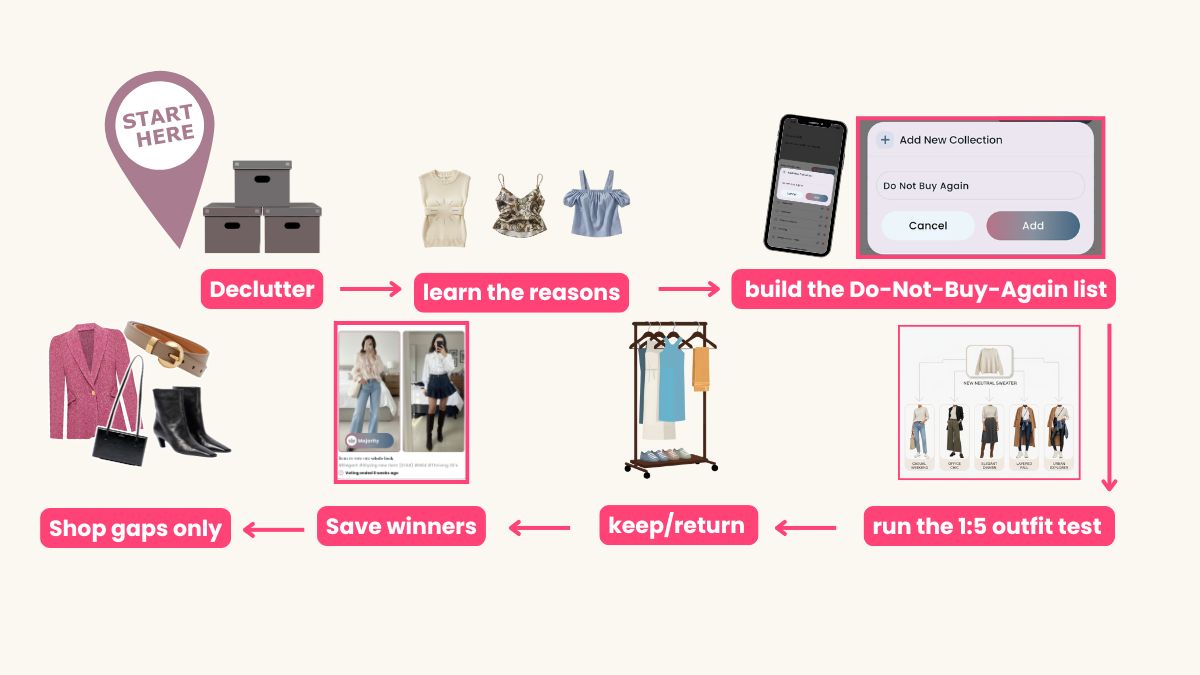
Quick Answer + Do Today Declutter pile = data: Fit, lifestyle mismatch, or duplicates → turn each into a shopping rule. Do-Not-Buy-Again list: If you declutter it more than once, stop re-buying it. The 1:5 Rule: One new item must make five real outfits with what you already own. Shop gaps only: Buy what completes outfits—not random “cute.” How to Shop for Clothes Without Adding Closet Clutter Let’s be honest: you can do a closet cleanout, feel amazing, and still end up right back where you started. Not because you “failed.” Not because you’re messy. Not because you need to Marie Kondo harder. It’s because decluttering is maintenance… and shopping is the source of the future clutter. If you want to stop the clutter from coming back, you don’t need another cleanout. You need closet entry rules—a way to decide what gets to come home with you in the first place. This post is my favorite way to do that: a simple system for how to shop for clothes without turning your closet into a revolving door for shopping/clutter. Why closets get cluttered again (even after decluttering) Here’s what usually happens: You declutter. You donate. You make piles. You swear you’re “only buying basics” from now on. You feel like a brand-new person. Then you go into Target (or scroll your favorite site) and suddenly you’re holding a “cute little top” that seems harmless because it’s only $24 and it’s “so versatile.” Or maybe you big splurge on a top your favorite Influencer had on and looked so chic in and it's dry clean only and you'd never actually wear it in your real life. Fast-forward: it gets worn once (maybe), then it becomes one of those pieces you’re always moving around but never choosing. So the clutter returns. And it builds. And the problem isn’t that you didn’t declutter hard enough. The problem is that your closet has no “entry policy”. Think of it like this: decluttering is taking out the trash. But your shopping habits are the open front door. If the door stays open, stuff will keep walking in. Step 1: Use your declutter pile as data Your declutter pile isn’t “stuff you don’t want.” It’s your closet giving you receipts. Most things get purged for three reasons—turn each into a rule: –Fit problems: pinches, rides up, needs “the right bra,” you tug all day.Rule: “I don’t buy this unless it fits perfectly right now.” No tailoring dreams. No “it’ll stretch.” –Lifestyle mismatch: cute in theory, wrong for real life (hello, dry clean only / heels / fussy pieces).Rule: “I don’t buy items for my fantasy life.” –Duplicates: “another version” you never wear because you already have a favorite.Rule: “I don’t buy duplicates unless it replaces something worn out.” That’s how decluttering clothes becomes data, not guilt. Step 2: Build a “Do-Not-Buy-Again” list This is your shopping guardrail against things you keep buying… and keep decluttering. Examples: scratchy sweaters, fussy shoes, trendy tops you avoid, “almost perfect” jeans, dry-clean-only anything, fantasy-life purchases. If you declutter a category more than once, it goes on the list. No debate. Stop re-buying what your closet has already rejected. You have to be brutally honest about (and grateful for) your lifestyle if you want to truly wear the clothes in your closet. Step 3: The 1:5 Rule (One New, Five Old) This is the rule that prevents clutter before it happens. Before you keep anything new, you have to style it five ways using what you already own. One new piece must create five real outfits. Not five fantasy fits. Not five “it could work if I had…” situations. Five outfits you would actually wear in your real life. If you can’t make it work with your current closet, what you’re buying isn’t an outfit-maker. It’s a future item to declutter. How to practically do this, because styling clothes isn’t easy! The STAR method is your easy way of doing this: Scan the new piece against your entire closet. Take out everything that could work. Arrange into outfits. Remember with pictures (Your 7am brain shouldn’t have to work so hard on things that are easily remembered.) Step 4: Turn this into a 10-minute preshopping routine (AMC version) Here’s the part that makes this system stick.Because the hardest part isn’t understanding the rule. The hardest part is remembering it when you’re tired, rushed, and standing in fitting-room lighting that has never done anyone a favor.So you make the rules visible and easy.This is where Adjust My Crown becomes your shopping safety system. Your 2-minute preshopping routine: –Create a Collection called “Do Not Buy Again" and move outfits with those pieces into that Collection.–Create a Collection called “Need More to Match With.” Add outfits where there’s one piece you want to wear more, but you don’t have enough other items to pair it with yet. Step 5: Shop for gaps that you've realized by being more analytic Common “gap fillers” that quietly fix a wardrobe:–a neutral belt (structure is an outfit-maker)–a true third piece (blazer, cardigan, denim jacket)–a shoe lane upgrade (white sneakers + loafers, or ballet flats + tall boots cover so much life)–a structured bag (instant polish) And sometimes the best “gap” isn’t a clothing item at all—it’s a closet tool that makes your wardrobe easier to see outfits in, like Adjust My Crown.Because the goal isn’t “own more.” The goal is wear more of what you already own and feel fantastic in it. The Preshop Filter (the whole system in one line) If you want the whole thing as a simple mental checklist, here it is: Declutter → learn the reasons → build the Do-Not-Buy-Again list → run the 1:5 outfit test → keep/return → save winners → shop gaps only That’s it. That’s the shopping safety system.And it works because it treats your closet like a real ecosystem, not a mood board for a fantasy lifestyle. Tiny reminder you can add to your life (and your cleanout posts)

Read More »
Closet Cleanout

Aiming for a new core aesthetic in 2026? Declutter Closet Cores Without Overwhelm

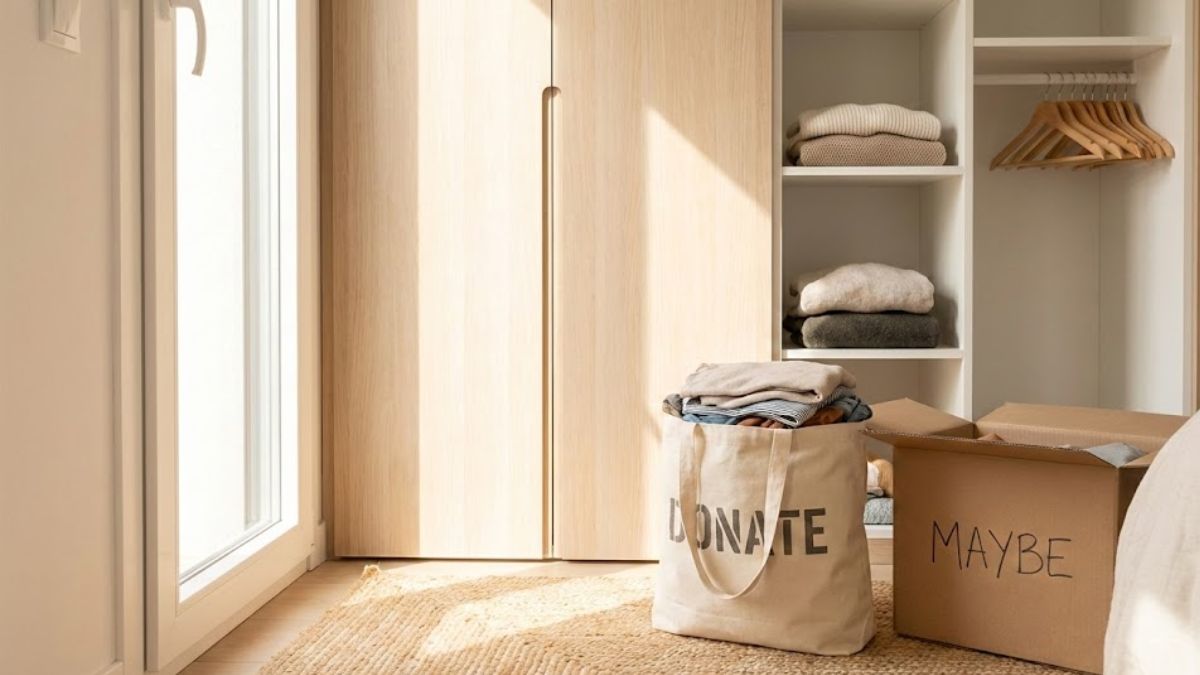
Quick Answer + Do Today TL;DR: To Declutter Closet without overwhelm, work in two containers: a bag for anything that leaves your house, and a “maybe” box for a 30-day time-out. Start with a 10-item speed sweep (easy no’s), then use a side-by-side photo test for the expensive guilt pieces. This keeps decluttering clothes simple while you rebuild an organized closet around what you actually wear. Do this: Put one donation bag + one “maybe” box by the closet door and stand in the doorway. Then: Set 10 minutes and grab 10 obvious no’s (itchy, stretched out, duplicates, “someday” sizes). Next: Set 10 minutes and box every “I’m on the fence” item for a 30-day time-out (especially expensive-but-unworn pieces). Stop when: The timer ends (or the bag is full). Done counts. AMC move: Recreate a “works every time” outfit from your saved photos, swap in one “on the fence” piece, post a 2-photo poll, then save the winner to a Collection called Closet Proof so you don’t forget what works. How to Declutter Closet Chaos in 20 Minutes With Two Simple Containers You don’t need a full “new you” era to start decluttering clothes and refining your new core aesthetic, even if you’re the closet cleanout type I call the “Style Curator” (someone who creates a new style as she clears space). You just need a trash bag, a box, and about 20 focused minutes. No matter your closet cleanout type (sentimental keeper, wear-tracker, weekend warrior…), this quick method works to help you clear a bag, fill a box, and finally see space again (and start to envision outfits in your new core aeshetic).–First step: grab one bag (recycle or donate) and one box (“maybe”)–Put them right by your closet door so every decision has a home. That’s it. You’re set up.–Now set your timer. Set Up the 2-Container Method Your “One-Bag, One-Box” rules are simple: Bag = going out (donate, give to a friend, or sell later; soon it just leaves your closet and enters the trunk of your car) Box = maybe (you’re not ready, so it gets a 30-day time-out) Stand in the doorway so you can toss things into the bag or box without overthinking. You’re not designing a Pinterest-perfect organized closet yet—you’re just reducing volume so getting dressed tomorrow morning doesn’t feel like a scavenger hunt. The 10-Item Speed Sweep (Start Easy) Set a 10-minute timer. Your only goal: find 10 things that are obvious “no’s.” Think: itchy fabric, stretched-out basics, duplicates (that one black tee you never pick), “someday” sizes that make you feel bad every time you see them hanging there. All clear “no’s” go straight into the bag. When the timer dings, you’re done. If you still have energy, do one more 10-item round from a single zone—just tops, just shoes, just pajamas you haven’t worn since 2019. This is where most people stop, and that’s okay. You’ve already created breathing room. But if you want to go deeper into the stuff that’s been quietly stealing your attention for months, keep reading. The Hard 10 Minutes (The Maybes and the Expensive Guilt) The next 10 minutes are for your maybes—the “I could wear this” pieces that always end up back on the hanger. Pull anything you keep trying on, tugging at, and taking off. Instead of letting those float around taking up micro decision energy every morning, they all go into one “on the fence” Collection in the AMC app (pictures of them or pictures of you in them), or your maybe box. This is your holding zone. Nothing is decided yet, but these pieces lose their front-row seat in your closet. You’re telling your brain, “These aren’t everyday go-tos right now,” which already makes getting dressed easier. Now, inside that pile of maybes, you’ll almost always find a special, painful category: the expensive but unworn pieces—the dress you splurged on, the blazer that “should” work, the jeans that never quite fit right. You keep them because they cost too much to donate, but you never wear them because something feels off. Here’s what I do: I grab a photo from my saved collections—one of those daily outfits I already posted that I know works—and I recreate it using the maybe piece. So if my saved outfit is black jeans + white tee + blazer, I swap in the expensive blazer I’ve been avoiding. Then I post both versions side by side as a poll. Same outfit. Different blazer. Let a few (anonymous but honest) friends vote. If the expensive blazer loses to the one I already love, that’s my answer. It goes in the donate bag. The poll just gave me permission to let go based on evidence, not guilt. If it wins? I wear it within the week (and take a daily pic for AMC) or it still goes in the bag after 30 days. Because winning a poll but never making it onto my body means it doesn’t actually work in my real life. And here’s what happens every time I post one of these polls: both outfits get saved automatically. So even when I’m clearing space, I’m building a library of outfits I know work. The expensive blazer that lost the poll? Gone on to someone who will actually wear it hopefully. But now I have proof of which blazer actually looks better on me, saved forever. Next time I’m shopping and see a “great deal” on another blazer, I can scroll back and see: do I even wear blazers? Which style actually wins on my body? This is how you stop buying duplicates of things that don’t work and start repeating the things that do. This is how clohtes in your closet become worn outfits in real life. How to Store Off-Season Without Chaos Once the bag and box are handled, pull obvious off-season items—heavy coats in July, linen shorts in January. This is such a personal and space-dependent step. Take a few minutes to figure

Read More »
Closet Cleanout

Declutter your closet without regret: letting go of luxury items you don’t use

See the real cost: Use AMC to declutter closet guilt-free by surfacing pieces unworn for 18 months. Reframe price: Cost-per-non-wear is higher than donating, reselling, or gifting. Decide fast: Keep only items you love, that fit, and support an organized closet. Move them on: Funnel “expensive but unworn” pieces into resale, donation, or a tighter capsule wardrobe. Turn a sunk-cost packed “but it was expensive” closet into an organized closet you actually wear You’re staring at a dress that cost half a paycheck and still has the tags. You want your wardrobe to feel clean, intentional, edited, and effortless—but every time you try to declutter your closet, guilt about the price tag stops you. You think about what you spent on that dress, those heels, that bag… and suddenly it feels “wasteful” to let them go, even though you never wear them. Here’s the mindset shift: the real waste isn’t releasing something you don’t use. The real waste is letting it sit there, costing you space, energy, and outfits you could actually love. It’s hard to shop a closet and make outfits when half the things in it you don’t really want to wear in your daily life for one reason or another. Raise your hand if you’re guilty of shopping for a life you don’t have. Cost-per-non-wear is quietly worse than just letting it go. First step Open the Adjust My Crown app and start looking through your Lookbook. If there is a luxury dress hanging in your closet that hasn’t been photographed to save over the past 12–18 months, why is it still in your closet? If you haven’t been tracking your fits to remember in AMC that long, maybe look through your photos or social media… do you see the piece worn, ever? Archives Side note on decluttering your closet: You don’t have to get rid of it. You could have a rack/box/section somewhere else called “Archives” for those pieces you can justify saving. Just get them out of your daily dressing area to declutter your closet. The sunk-cost trap hiding in your wardrobe Those big-ticket items—your unused luxury bags, forgotten luxury dresses, and random luxury fashion buys—aren’t trophies. If they’re not being worn, they’re blockers keeping you from an organized closet or intentional capsule wardrobe that works every day. The real waste isn’t letting something go; it’s letting it sit. Would I…? For each 0-wear luxury bag, luxury dress, and other luxury fashion items you haven’t touched, ask: Would I buy this again today at full price? If no, it goes to the release pile. If yes, plan a specific outfit you’ll wear this week. Does it match the vibe of the capsule wardrobe I actually want? Where those “expensive but unworn” pieces go Your release pile is not failure; it’s a style upgrade. You can: Resell to recoup some cash. Gift to a friend who’ll love it. Donate to give it a real life off the hanger (Dopamine bonus: Find a thrift store in your area that supports a cause you love.) Every time you move something on, you’re not just losing a price tag—you’re gaining clarity. You’re training your eye to see what you truly wear and what actually teaches you how to dress better. What remains Over time, what’s left is a tight, intentional edit: a wardrobe full of pieces that fit, flatter, and feel like you. That’s how you go from “closet full of clothes, nothing to wear” to a quietly flexy, edited, effortless closet you can get dressed from in minutes. If that’s not a luxury closet, I don’t know what is. How do I start to declutter expensive items without freaking out? Start with data, not emotion. In AMC, filter for items with zero wears in the last 18 months. Those pieces go into a “review” pile where you decide to resell, donate, gift, or intentionally style this week. What if I might wear my luxury bags or luxury dresses someday? Give each piece a deadline and a plan. If you can’t create at least two outfits and a specific occasion in the next 30 days, it’s a strong sign that releasing it will serve you more than keeping it. Can I still have an organized closet if I love luxury fashion? Yes. The goal isn’t fewer nice things; it’s fewer unused things. Keep the luxury fashion items you actively wear and adore, and let go of the rest so they don’t crowd your space or style. How does this help me learn how to dress better? When you release guilt pieces, AMC makes it easier to see what you actually wear. Those patterns show your real style, helping you buy and style clothes that fit your life instead of chasing random trends. What should I do with the clothes I declutter from my closet? Create three bags: resale, donation, and gifting. Log where items go in AMC so you see the full journey and can celebrate the space, money, and mental energy you’ve reclaimed.

Read More »
Closet Cleanout

How to declutter clothes With an Easy On the Fence Rule

TL;DR Gather maybes: Move every “I’m not sure” piece into one On the Fence collection to declutter clothes calmly. Set a deadline: Choose a wear-by date like Easter or 30 days and label the bin, poll, or app. Decide fast: Always check this section first for fresh outfit ideas and donate anything unworn by the deadline. Want quick outfit clarity? Snap 2 pics and let Adjust My Crown vote—then save the winner in a Collection that’s as unique as you are. An easy rule for organizing wardrobe maybes You know those pieces you don’t love, but don’t hate enough to toss? They’re why decluttering stalls. Instead of forcing a yes/no decision in one day, the "On the Fence" Collection method gives every “maybe” a short audition. First step: create an On the Fence Collection in the Adjust My Crown app. Second step: gather your “On the Fence” pieces from your closet and put them in one area together. This works because you’re not guessing—you’re tracking what you actually wear. It’s perfect for New Year resolution declutter & refresh vibes, 30 bags in 30 days challenges, or a “by Easter” closet reset. You’ll see how to make outfits look better using what you already own before you add more. Step 1: Build your On the Fence Collection Grab anything you hesitate over: “I like it… but do I?” Hang it in one area of your closet or gather those things in one bin. This instantly separates everyday favorites from maybes, which makes organizing clothes way less overwhelming. Start a Collection within AMC called “On the Fence” Step 2: Set your wear-by rule Pick a clear deadline: 30 days, by Easter, or “before spring break.” Write that date: On a sticky note on the bin In the title of your collection (“On the Fence/Easter” or “Have I worn this by Easter?”) In the comments under your own poll: “Wear this by ___ or let it go” or even be more descriptive like “loved it online but it kind of itches irl” If the date passes and you didn’t wear it, the decision is made. Your calendar makes the tough calls so you don’t have to. Step 3: Shop this section first When you get dressed, start in your "On the Fence" section of your closet or bin. Use those pieces to try to inspire fresh outfit ideas with your go-to favorites. Take pics for polls, so you remember which combos actually work and how to make outfits look better for real life. Step 4: Let the deadline make the call When your chosen date hits: Anything worn and loved stays in your closet. Anything unworn gets donated, sold, or recycled, no drama, no overthinking… The result? Fewer maybes, more outfits that actually feel like you. You’ve just used one simple rule to declutter clothes, while quietly organizing your wardrobe around what you truly wear. What is the On the Fence method to declutter clothes? The On the Fence method helps you **declutter clothes** you feel unsure about by moving them into one collection, setting a wear-by date, and donating anything unworn by that deadline. How do I start an On the Fence collection? Pull every “maybe” item—things you don’t instantly love—and place them on one rail, in one bin, or inside a tagged collection in your wardrobe app labeled “On the Fence” or “Have I worn this by Easter?”. How long should I give myself before I decide what to keep? Choose a clear deadline, like 30 days, the start of spring, or Easter. The exact date matters less than actually honoring it when you review and edit your closet. How does this help with organizing wardrobe long term? Because you track what you truly wear, you can rebuild your closet around those pieces, making **organizing wardrobe** and future edits easier and faster. Can this work with a 30 bags in 30 days challenge? Yes. Use your On the Fence collection as the main source for each day’s bag, and let the deadline plus wear history decide what gets donated or sold. Will this help me find new outfit ideas? Absolutely. Shopping your On the Fence section first forces you to create new **outfit ideas** with what you own, so you see **how to make outfits look better** before buying more pieces.

Read More »