- TL;DR: To Declutter Closet without overwhelm, work in two containers: a bag for anything that leaves your house, and a “maybe” box for a 30-day time-out. Start with a 10-item speed sweep (easy no’s), then use a side-by-side photo test for the expensive guilt pieces. This keeps decluttering clothes simple while you rebuild an organized closet around what you actually wear.
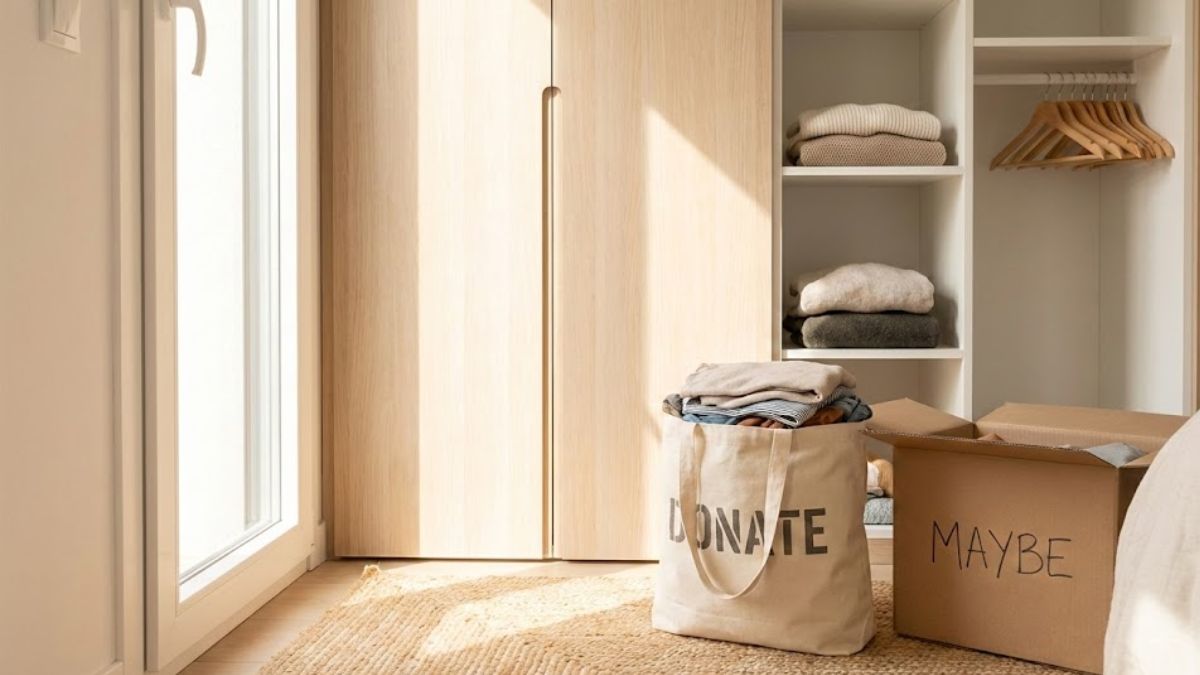
- Do this: Put one donation bag + one “maybe” box by the closet door and stand in the doorway.
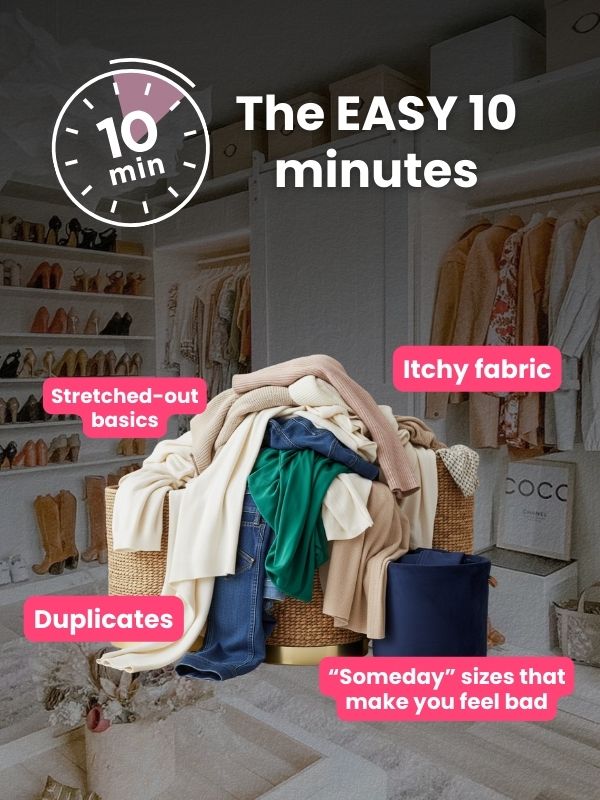
- Then: Set 10 minutes and grab 10 obvious no’s (itchy, stretched out, duplicates, “someday” sizes).
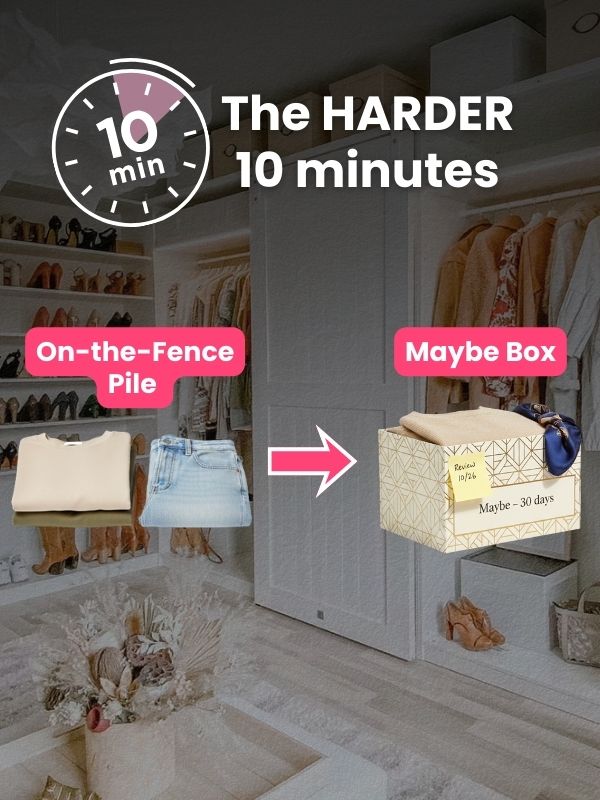
- Next: Set 10 minutes and box every “I’m on the fence” item for a 30-day time-out (especially expensive-but-unworn pieces).
- Stop when: The timer ends (or the bag is full). Done counts.
How to Declutter Closet Chaos in 20 Minutes With Two Simple Containers
You don’t need a full “new you” era to start decluttering clothes and refining your new core aesthetic, even if you’re the closet cleanout type I call the “Style Curator” (someone who creates a new style as she clears space). You just need a trash bag, a box, and about 20 focused minutes. No matter your closet cleanout type (sentimental keeper, wear-tracker, weekend warrior…), this quick method works to help you clear a bag, fill a box, and finally see space again (and start to envision outfits in your new core aeshetic).
–First step: grab one bag (recycle or donate) and one box (“maybe”)
–Put them right by your closet door so every decision has a home. That’s it. You’re set up.
–Now set your timer.
Set Up the 2-Container Method
Your “One-Bag, One-Box” rules are simple:
Bag = going out (donate, give to a friend, or sell later; soon it just leaves your closet and enters the trunk of your car)
Box = maybe (you’re not ready, so it gets a 30-day time-out)
Stand in the doorway so you can toss things into the bag or box without overthinking. You’re not designing a Pinterest-perfect organized closet yet—you’re just reducing volume so getting dressed tomorrow morning doesn’t feel like a scavenger hunt.
The 10-Item Speed Sweep (Start Easy)
Set a 10-minute timer. Your only goal: find 10 things that are obvious “no’s.”
Think: itchy fabric, stretched-out basics, duplicates (that one black tee you never pick), “someday” sizes that make you feel bad every time you see them hanging there.
All clear “no’s” go straight into the bag. When the timer dings, you’re done. If you still have energy, do one more 10-item round from a single zone—just tops, just shoes, just pajamas you haven’t worn since 2019.
This is where most people stop, and that’s okay. You’ve already created breathing room. But if you want to go deeper into the stuff that’s been quietly stealing your attention for months, keep reading.
The Hard 10 Minutes (The Maybes and the Expensive Guilt)
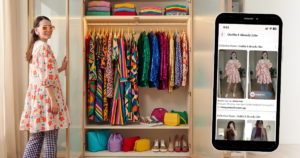
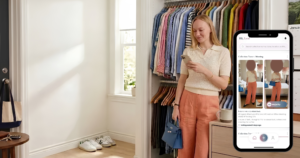
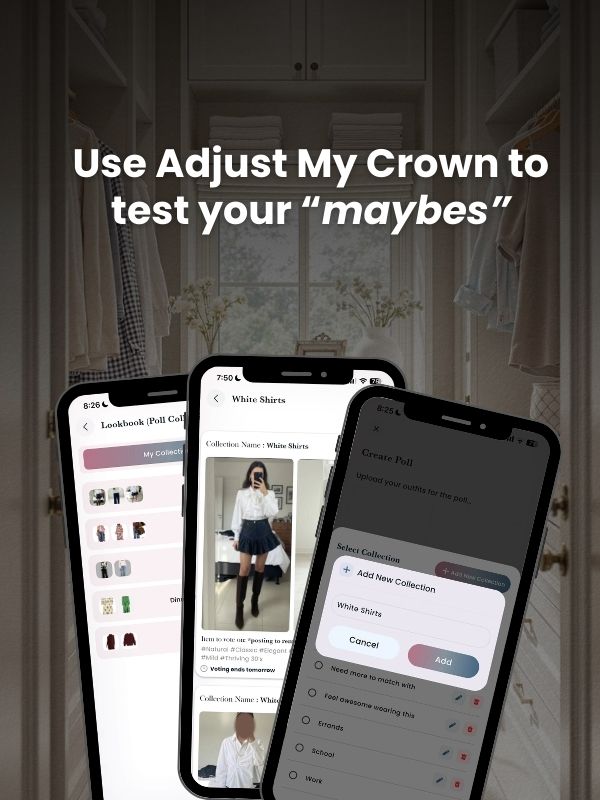
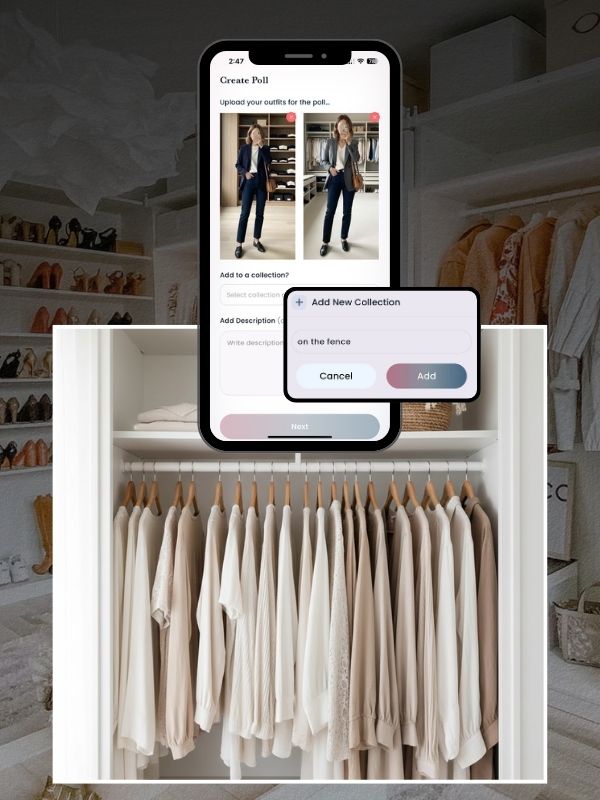
The next 10 minutes are for your maybes—the “I could wear this” pieces that always end up back on the hanger. Pull anything you keep trying on, tugging at, and taking off. Instead of letting those float around taking up micro decision energy every morning, they all go into one “on the fence” Collection in the AMC app (pictures of them or pictures of you in them), or your maybe box.
This is your holding zone. Nothing is decided yet, but these pieces lose their front-row seat in your closet. You’re telling your brain, “These aren’t everyday go-tos right now,” which already makes getting dressed easier.
Now, inside that pile of maybes, you’ll almost always find a special, painful category: the expensive but unworn pieces—the dress you splurged on, the blazer that “should” work, the jeans that never quite fit right. You keep them because they cost too much to donate, but you never wear them because something feels off.
Here’s what I do: I grab a photo from my saved collections—one of those daily outfits I already posted that I know works—and I recreate it using the maybe piece. So if my saved outfit is black jeans + white tee + blazer, I swap in the expensive blazer I’ve been avoiding. Then I post both versions side by side as a poll. Same outfit. Different blazer. Let a few (anonymous but honest) friends vote. If the expensive blazer loses to the one I already love, that’s my answer. It goes in the donate bag. The poll just gave me permission to let go based on evidence, not guilt.
If it wins? I wear it within the week (and take a daily pic for AMC) or it still goes in the bag after 30 days. Because winning a poll but never making it onto my body means it doesn’t actually work in my real life.
And here’s what happens every time I post one of these polls: both outfits get saved automatically. So even when I’m clearing space, I’m building a library of outfits I know work. The expensive blazer that lost the poll? Gone on to someone who will actually wear it hopefully. But now I have proof of which blazer actually looks better on me, saved forever. Next time I’m shopping and see a “great deal” on another blazer, I can scroll back and see: do I even wear blazers? Which style actually wins on my body?
This is how you stop buying duplicates of things that don’t work and start repeating the things that do. This is how clohtes in your closet become worn outfits in real life.
How to Store Off-Season Without Chaos
Once the bag and box are handled, pull obvious off-season items—heavy coats in July, linen shorts in January.
This is such a personal and space-dependent step. Take a few minutes to figure out the easiest, most realistic solution for you. Though I have a huge space for off-season clothes upstairs with closet rods and all (bless the woman who lived in this house before me. Girlfriend loved her clothes and was ORGANIZED), the reality is I will never spend a Saturday when seasons change hauling armfuls of sweaters up and down stairs. Instead I chunk the clothes in baskets at the top of my closet because I’ll actually do that. I don’t fold carefully, by the way. I know myself too well to have any delusions of grandeur.
So know yourself and your realistic limitations here. My baskets aren’t even clear—they’re pretty rattan baskets because clear bins in my everyday closet would drive me bonkers (remember I don’t even fold my sweaters). I use tags on heavy cardstock attached with grosgrain ribbon to the basket handles. Very unobtrusive but functional, but pretty.
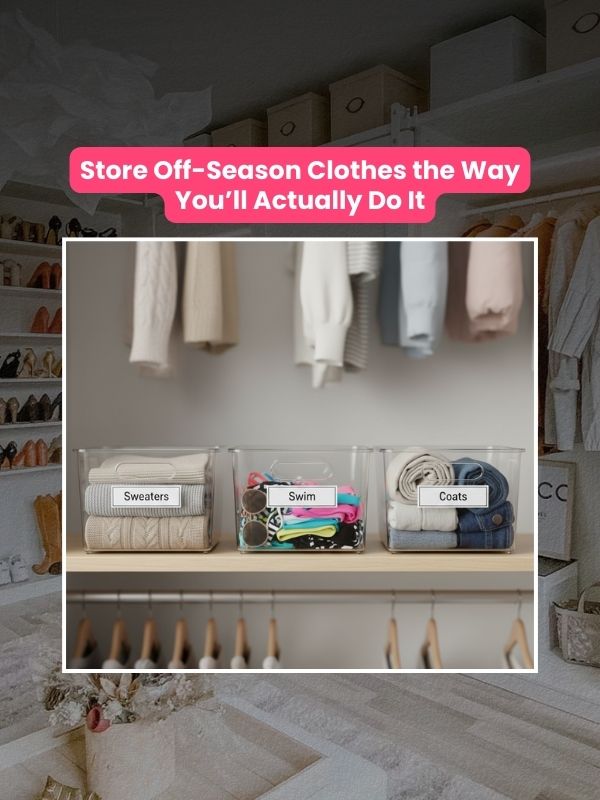
If you’re the type who needs to see everything, use clear bins. If visual clutter makes you twitchy, use covered baskets and label the front. Group by type (sweaters, swim, coats, pajamas, comfy). This keeps your everyday closet lighter and makes getting dressed today actually possible.
Before you box up off-season clothes, do one more check: scroll through your saved collections and look at what you actually wore last season. If that green sweater didn’t show up in a single saved outfit from November through March, don’t store it. Into the donate bag it goes. You have photographic evidence of what you reach for. Trust it.
Test Your Maybes Before They Leave
Here’s the step most decluttering clothes advice skips: what if you’re not sure? What if the piece doesn’t spark joy but it also doesn’t spark hate?
This is exactly why I started taking photos of my daily outfits in the first place. Not for Instagram. For evidence. When I get dressed and feel good, I take a quick photo. When I get dressed and feel weird, I take a photo of that too (adding Comments about it for my 7am brain), then change and take another photo of what I changed into (more comments for my 7am brain).
Style one outfit with the maybe piece. Style one outfit without it—using something you already love from your saved outfits. Post both photos as a poll. Let a few friends vote. If the “without” outfit wins, you have your answer. The maybe piece goes in the bag. If the “with” outfit wins, pull it back out and actually wear it this week. Then decide.
This is how you stop second-guessing yourself six months later when you’re digging through donation bags (that are still in your trunk…) wondering if you made a mistake. You tested it. You got feedback. You made a choice based on evidence, not fear of regret.
Maintain in 5 Minutes a Week
Pick one tiny weekly ritual and add it to your calendar:
–Sunday night: pull 5 “meh” items to the front to test this week
–Every laundry day: 1 item goes to bag or box
–First of the month: scroll your saved collections and check your maybe box—anything that didn’t show up in a single saved outfit gets moved to the donate bag
If something’s been in the maybe box for 30 days and you haven’t reached for it once, that’s your answer. Into the bag it goes.
And if you’re stuck on a piece that feels too nice to donate but too “blah” to wear, post one last poll. Grab an outfit you know works from your collections. Recreate it with the questionable piece. Show both versions side by side. Let the votes confirm what your gut already knows. Then act on it.
If you want a slower, deeper reset after this quick win, pair this with my 30-Day Closet Cleanout Challenge and let that guide you day-by-day. But for today, you’ve cleared a bag, filled a box, and made space. That’s enough.
How long does the One-Bag, One-Box method to declutter a closet take?
Most people can complete their first round in 20–30 minutes. Set a timer, aim for just 10 obvious items, and stop when it goes off. You can always repeat the process on another day instead of trying to clear the entire space at once.
What if I’m too sentimental to declutter closet pieces I love?
Use the box as a gentle middle step. Place sentimental or “I’m not sure” items in the maybe box with a 30-day date. If you don’t reach for them during that time, it’s a sign they’re ready to leave your closet while the memory stays with you.
How do I handle expensive but unworn clothes?
First, move them into the maybe box and give yourself 30 days to wear each piece at least once. If it still doesn’t feel right, you can donate, sell, or gift it. You already paid for the lesson, so you don’t have to keep the guilt or the clutter.
What storage do I need for an organized closet after decluttering?
Start simple: clear storage bins for off-season items, velvet or slim hangers to save space, a basic label maker, and a few drawer dividers or shelf risers. These tools support an organized closet without requiring a full makeover system.
How can I maintain my closet so it doesn’t get overwhelmed again?
Choose one 5-minute habit each week: a mini 10-item sweep, checking your maybe box, or editing what comes back from laundry. Tiny, consistent actions keep decluttering clothes from turning into another huge project.
Can I combine this with a longer closet challenge?
Yes. Use the One-Bag, One-Box method for a fast win, then follow a 30-day closet cleanout challenge for a deeper, slower reset. The quick clear-out gives you momentum, and the challenge helps you fine-tune your style and systems over time.