
6 Rules and 5 Formulas for a Perfect All White Summer Outfit
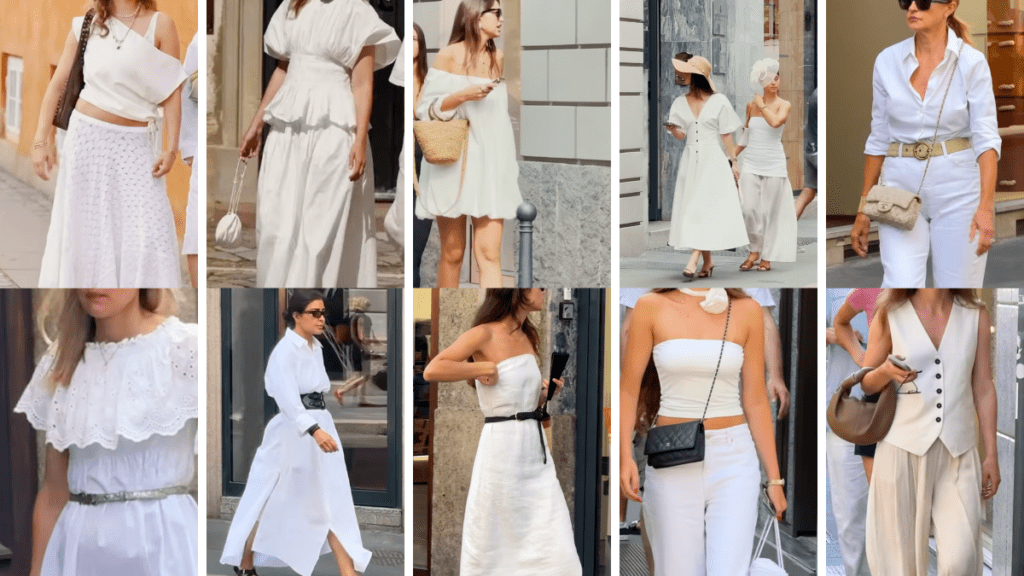
19 White Summer Looks That Show the Rules in Action to Elevate your Outfit (shop your closet for the pieces first) A white shirt is a personal favorite of mine, always, and in every season, so it goes without saying I have an affinity for all white summer outfits. White summer outfits should be easy. Then you put one on and suddenly it feels blah and boring, sugary sweet (which is a total misrepresentation of my personality), or weirdly unfinished like you draped on a sheet and cut out arm holes. The color is beautiful, but the outfit itself is not doing much. That is what these 19 street style images are useful for. They show, very clearly, that “how to elevate your outfit” usually has less to do with buying a new piece and more to do with giving the outfit a little backbone with one of these 6 rules. In these looks, that “backbone” comes from the same handful of moves over and over again: waist definition, texture, contrast, natural materials, and a better finishing choice. This keeps the white outfit from looking or feeling too boring when you wear it. Housekeeping Mom stuff real quick: If you’re worried that the white is see through, just assume it is. The fix is skin tone undergarments or slips, etc, over white ones. White creates a contrast that can be seen but underpinnings that are the color of your skin will blend in. Secondly, if your whites look sad, Oxiclean White Revive is fantastic for keeping whites white without chlorine bleach. It works on yellowing and dingy whites. Rule 1: Define the Waist If there is one move that repeats most often here, it is waist definition. White can drift fast. It can look airy in a good way, or it can look like the outfit forgot to arrive. A defined waist is often the difference between the two. Sometimes that shape comes from an actual belt. One outfit is just a plain white tee and white trousers, but the dark belt and woven bag make the outfit feel finished instead of blank. Another outfit does something similar with a white button down shirt, white trousers, and a gold belt that gives the whole look some polish. A strapless dress with a skinny black belt added shows that one small decision changes the dress from soft and simple to deliberate. In another outfit, the cut of the vest itself narrows the torso and creates shape without needing a separate belt. There are softer versions too. The bottom right outfit has a fitted upper section and a fuller skirt, so the waist reads naturally. Finally there’s a dress with a collar to die for (the layering possibilities!) that uses a silver belt, which keeps all that softness from becoming too floaty. If a white outfit feels vague, these are the first and easiest side-by-sides I would test in Adjust My Crown (apple app store version and google play version): with belt, without belt, tucked, untucked. The answer usually appears pretty fast. Rule 2: Add Texture, Anywhere White needs surface interest. Otherwise it can go flat in a hurry. A lot of these looks work because the outfit is not just white, it is white plus something tactile: eyelet, embroidery, crisp cotton, lace, ruching, woven straw, or raffia. That extra texture gives the outfit depth without forcing it into louder color or more layers. One outfit has a softly textured skirt that saves the whole look from reading too plain. The dress in the bottom right uses a subtle dot print, which is enough to make an easy dress feel intentional. The top middle dress has ruffles and movement, and that texture (and belt) is a big reason it feels feminine without becoming fussy. The top right outfit is just so cool: the oversized white top is simple, but the sheer lace skirt underneath gives the outfit dimension and a very different mood. The same thing happens in the accessories. The bottom left’s woven raffia bag adds warmth and texture at the same time. Even when the clothes are simple, the materials keep the look from feeling one-note. If white feels dull, I would reach for texture before I reached for another piece of clothing. In Adjust My Crown, compare the plain version against the version with the woven bag, the eyelet skirt, the crisp poplin shirt, or the lace layer. Texture often does more than another layer ever will. Rule 3: Use Contrast to Keep White From Looking Too Sweet Some white outfits need edge. Without it, they can tip into bridal, overly delicate, or just too soft for real life. A grounding contrast fixes that quickly. It does not have to be dramatic. It just has to be clear. The top left outfit is a good example. The white-on-white base is simple, but the black Mary Jane changes the whole tone. It gives the outfit some structure and prevents it from floating off into sameness. The bottom left outfit uses that same idea with a black belt on a strapless white dress. The bottom right outfit takes a long white shirt dress and grounds it with a black belt bag and black Alaia flats. The top right outfit uses a black quilted crossbody against a strapless white top and white trousers, and that small dark shape helps the outfit feel city-ready instead of washed out. And yes, contrast can come from a handbag too. It does not always have to be a belt or shoe. The eye just needs one stronger note to hold onto. If an outfit feels too pretty, too airy, or too soft-focus, try one grounded piece: a black flat, a darker bag, a narrow belt, dark sunglasses. Then stop. That is usually enough. Rule 4: Natural Materials Make White Look Warmer and Richer White can look fresh, but it can also look stark if there is nothing warming it up. That is where straw, raffia,