
Aiming for a new core aesthetic in 2026? Declutter Closet Cores Without Overwhelm
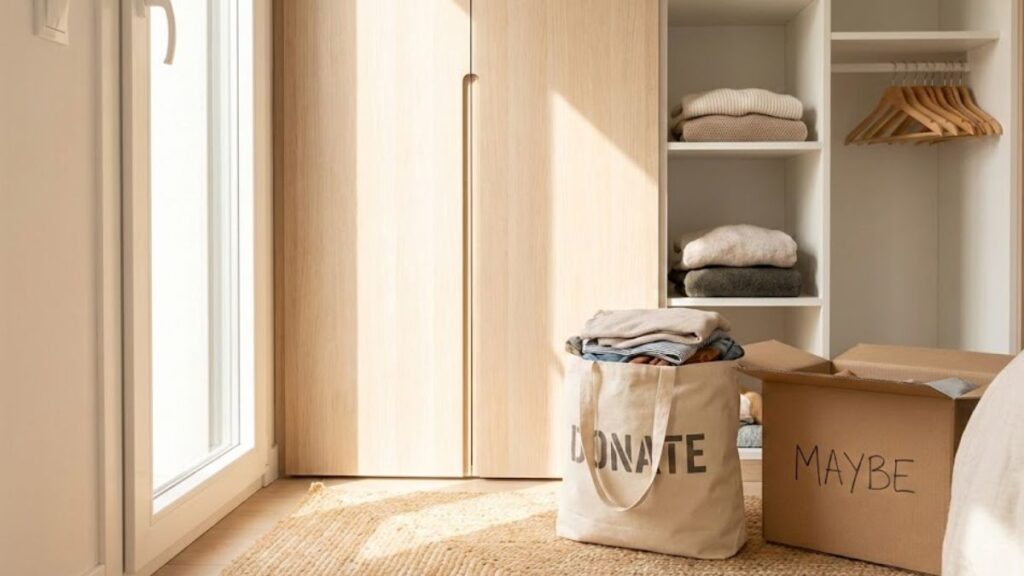
Quick Answer + Do Today TL;DR: To Declutter Closet without overwhelm, work in two containers: a bag for anything that leaves your house, and a “maybe” box for a 30-day time-out. Start with a 10-item speed sweep (easy no’s), then use a side-by-side photo test for the expensive guilt pieces. This keeps decluttering clothes simple while you rebuild an organized closet around what you actually wear. Do this: Put one donation bag + one “maybe” box by the closet door and stand in the doorway. Then: Set 10 minutes and grab 10 obvious no’s (itchy, stretched out, duplicates, “someday” sizes). Next: Set 10 minutes and box every “I’m on the fence” item for a 30-day time-out (especially expensive-but-unworn pieces). Stop when: The timer ends (or the bag is full). Done counts. AMC move: Recreate a “works every time” outfit from your saved photos, swap in one “on the fence” piece, post a 2-photo poll, then save the winner to a Collection called Closet Proof so you don’t forget what works. How to Declutter Closet Chaos in 20 Minutes With Two Simple Containers You don’t need a full “new you” era to start decluttering clothes and refining your new core aesthetic, even if you’re the closet cleanout type I call the “Style Curator” (someone who creates a new style as she clears space). You just need a trash bag, a box, and about 20 focused minutes. No matter your closet cleanout type (sentimental keeper, wear-tracker, weekend warrior…), this quick method works to help you clear a bag, fill a box, and finally see space again (and start to envision outfits in your new core aeshetic).–First step: grab one bag (recycle or donate) and one box (“maybe”)–Put them right by your closet door so every decision has a home. That’s it. You’re set up.–Now set your timer. Set Up the 2-Container Method Your “One-Bag, One-Box” rules are simple: Bag = going out (donate, give to a friend, or sell later; soon it just leaves your closet and enters the trunk of your car) Box = maybe (you’re not ready, so it gets a 30-day time-out) Stand in the doorway so you can toss things into the bag or box without overthinking. You’re not designing a Pinterest-perfect organized closet yet—you’re just reducing volume so getting dressed tomorrow morning doesn’t feel like a scavenger hunt. The 10-Item Speed Sweep (Start Easy) Set a 10-minute timer. Your only goal: find 10 things that are obvious “no’s.” Think: itchy fabric, stretched-out basics, duplicates (that one black tee you never pick), “someday” sizes that make you feel bad every time you see them hanging there. All clear “no’s” go straight into the bag. When the timer dings, you’re done. If you still have energy, do one more 10-item round from a single zone—just tops, just shoes, just pajamas you haven’t worn since 2019. This is where most people stop, and that’s okay. You’ve already created breathing room. But if you want to go deeper into the stuff that’s been quietly stealing your attention for months, keep reading. The Hard 10 Minutes (The Maybes and the Expensive Guilt) The next 10 minutes are for your maybes—the “I could wear this” pieces that always end up back on the hanger. Pull anything you keep trying on, tugging at, and taking off. Instead of letting those float around taking up micro decision energy every morning, they all go into one “on the fence” Collection in the AMC app (pictures of them or pictures of you in them), or your maybe box. This is your holding zone. Nothing is decided yet, but these pieces lose their front-row seat in your closet. You’re telling your brain, “These aren’t everyday go-tos right now,” which already makes getting dressed easier. Now, inside that pile of maybes, you’ll almost always find a special, painful category: the expensive but unworn pieces—the dress you splurged on, the blazer that “should” work, the jeans that never quite fit right. You keep them because they cost too much to donate, but you never wear them because something feels off. Here’s what I do: I grab a photo from my saved collections—one of those daily outfits I already posted that I know works—and I recreate it using the maybe piece. So if my saved outfit is black jeans + white tee + blazer, I swap in the expensive blazer I’ve been avoiding. Then I post both versions side by side as a poll. Same outfit. Different blazer. Let a few (anonymous but honest) friends vote. If the expensive blazer loses to the one I already love, that’s my answer. It goes in the donate bag. The poll just gave me permission to let go based on evidence, not guilt. If it wins? I wear it within the week (and take a daily pic for AMC) or it still goes in the bag after 30 days. Because winning a poll but never making it onto my body means it doesn’t actually work in my real life. And here’s what happens every time I post one of these polls: both outfits get saved automatically. So even when I’m clearing space, I’m building a library of outfits I know work. The expensive blazer that lost the poll? Gone on to someone who will actually wear it hopefully. But now I have proof of which blazer actually looks better on me, saved forever. Next time I’m shopping and see a “great deal” on another blazer, I can scroll back and see: do I even wear blazers? Which style actually wins on my body? This is how you stop buying duplicates of things that don’t work and start repeating the things that do. This is how clohtes in your closet become worn outfits in real life. How to Store Off-Season Without Chaos Once the bag and box are handled, pull obvious off-season items—heavy coats in July, linen shorts in January. This is such a personal and space-dependent step. Take a few minutes to figure